

Table of Contents
- How the Interior Design Styles Quiz Works
- Top 10 Interior Design Styles to Know
- Reading Your Quiz Results: Design Profile and Psychology
- How to Mix Interior Design Styles Without Clashing
- Essential Home Decor Accents That Define Your Style
- Budget-Friendly Ways to Apply Your Quiz Results
- Frequently Asked Questions
Last Updated: September 15, 2026
How the Interior Design Styles Quiz Works
An interior design styles quiz is a structured self-assessment that matches your preferences in color, texture, furniture shape, and lighting to a recognized decorating aesthetic. An interior design styles quiz is typically built around questions that predict how you want a room to feel, not just how it looks in a photo.
Most quizzes work the same way: you answer visual and lifestyle questions, each answer scores toward one or more design profiles, and the highest totals become your result. Good quizzes weight questions rather than treating them equally.
What separates a useful quiz from a novelty is what happens after the result. Below, we turn your result into a working plan: a design vocabulary, a mixing strategy, and a budget path.
Top 10 Interior Design Styles to Know
The ten styles below cover the overwhelming majority of what you'll see in homes and design catalogs. Learn the vocabulary first, then take the quiz. Each entry includes the detail that most reliably separates it from its closest neighbor.
| Style | Defining Feature | Signature Materials | Best For | Closest Neighbor (and the tell) |
|---|---|---|---|---|
| Traditional | Symmetry, ornate detail | Dark wood, silk, brass | Period homes, formal rooms | Transitional, traditional has matched pairs and carved detail; transitional does not |
| Transitional | Blended classic and modern | Linen, muted wood, glass | Most open floor plans | Contemporary, transitional keeps classic silhouettes; contemporary does not |
| Contemporary | Clean lines, current materials | Chrome, glass, leather | New builds, minimal clutter | Modern, contemporary shifts with the decade; modern refers to a fixed historical movement |
| Mid-Century Modern | Tapered legs, organic curves | Walnut, teak, wool | Small living rooms | Scandinavian, mid-century uses saturated accents and darker woods; Scandinavian stays pale |
| Minimalist | Few objects, high intention | Matte white, stone, steel | Calm, low-maintenance homes | Scandinavian, minimalist removes texture; Scandinavian layers it |
| Scandinavian | Light wood, soft neutrals | Birch, sheepskin, ceramic | Apartments, renters | Minimalist, Scandinavian adds hygge textiles and warm lighting; minimalist does not |
| Industrial | Raw structure, exposed metal | Brick, iron, reclaimed wood | Lofts, converted spaces | Bohemian, industrial is hard and cool; bohemian is soft and layered |
| Bohemian | Layered pattern and texture | Rattan, cotton, brass | Renters, eclectic collectors | Coastal, bohemian uses saturated pattern; coastal stays in a light, airy palette |
| Coastal | Airy palette, natural fiber | Jute, driftwood, linen | Beach-adjacent and bright homes | French Country, coastal is cool and breezy; French Country is warm and rustic |
| French Country | Rustic elegance, warm patina | Toile, oak, wrought iron | Kitchens, dining rooms | Traditional, French Country is rustic and asymmetrical; traditional is formal and symmetrical |
Traditional, Transitional, and Contemporary
Traditional leans on symmetry, matched pairs, and rich materials, reading as formal and established. The mechanism is bilateral symmetry: draw a line down the room's center and the halves mirror each other. It pairs naturally with inherited furniture.
Transitional sits between traditional and modern: classic silhouettes in neutral palettes with cleaner lines. It's the most forgiving style for open floor plans because it doesn't fight existing architecture. The tell is a rolled-arm sofa in solid linen, or a traditional dining table with unadorned legs. It's the most common quiz result because it's the safest answer.
Contemporary refers to what's current, not to modernism as a historical movement. Contemporary today looks different than a decade ago, which is the point. If a room's defining pieces could be dated by their hardware finish, brushed brass now, chrome ten years ago, it's contemporary, not modern.
Mid-Century Modern, Minimalist, Scandinavian, and Industrial
Mid-Century Modern is defined by tapered legs, organic curves, and walnut and teak against saturated accents. It works in small rooms because the furniture sits low and visually light. The historical anchor is the post-war period, when designers like Charles and Ray Eames, George Nelson, and Florence Knoll pushed molded plywood, fiberglass, and tubular steel into mass production, hence the emphasis on honest materials over ornament.
Minimalist design is about intentional editing: fewer objects, each earning its place. Visual balance and negative space do the work pattern normally does. The practical test: if removing one object from a shelf would make it look better, the room isn't minimalist yet.
Scandinavian shares minimalism's restraint but softens it with light woods, textile layers, and strong lighting design. It's the most renter-friendly style here. Long dark Nordic winters pushed designers toward pale woods that bounce light and layered textiles that add warmth without visual weight, hence the wool throw, sheepskin, or textured rug.
Industrial exposes the building itself: brick, ductwork, concrete, iron. The trap is overdoing it, one or two raw elements read as intentional; a whole room reads as a warehouse. The best versions keep one or two original elements rather than simulating all of them.
Bohemian, Coastal, and French Country
Bohemian rewards layering. Textiles, rattan, plants, and collected objects build a room that feels personal rather than styled, which suits renters who can't change the shell of a space. The mechanism is density: the eye keeps finding new details, so the style tolerates mismatched pieces that would look accidental in a minimalist room.
Coastal is not the same as nautical. The good version uses an airy palette, natural fiber rugs, and weathered wood, without a single anchor motif. The tell is the palette: sand, sea glass, driftwood gray, and white. Remove every literal beach reference and the room should still read as coastal.
French Country brings rustic elegance through warm patina, toile patterns, and wrought iron. It pairs well with traditional pieces and looks best in kitchens and dining rooms. The mechanism is asymmetry plus age: a farmhouse table with mismatched chairs, a worn stone floor, a copper pot on open shelving, the opposite of traditional's matched-pair logic.
Reading Your Quiz Results: Design Profile and Psychology
Your quiz result is a starting point, not a verdict. The psychology behind it matters more than the label, and almost no quiz content explains why you got the result you did.
Why You Prefer What You Prefer
Design preferences track closely with how you want a space to function, which in turn tracks with a few psychological drivers. Knowing which one drives your answers makes your result far more actionable.
- Visual load tolerance. Some people feel calm in a room with many objects; others feel scattered. If you scored minimalist or Scandinavian, you likely have a low tolerance for visual noise. If you scored bohemian or maximalist-leaning, you likely use objects as memory anchors and feel a room is unfinished without them.
- Need for order versus need for warmth. Traditional and transitional profiles usually correlate with a preference for symmetry and predictability.
Why the Same Person Gets Different Results for Different Rooms
Build a Three-Part Design Profile
How to Mix Interior Design Styles Without Clashing
Essential Home Decor Accents That Define Your Style
Budget-Friendly Ways to Apply Your Quiz Results
Frequently Asked Questions
How do I find my interior design style with a quiz?
An interior design styles quiz asks about the rooms, colors, and textures you already gravitate toward, then matches your answers to a design profile. Answer honestly instead of picking what sounds trendiest. Once you have a result, build a mood board with three to five images that share that look. Your quiz result is a starting point, not a rule; it gives you a design vocabulary so you can shop with purpose instead of guessing.
What is the 70/30 rule in decorating?
The 70/30 rule splits a room into 70 percent dominant style and 30 percent secondary influence. If your quiz result is Scandinavian, roughly 70 percent of your furnishings, color palette, and lighting design should read Scandinavian, while the remaining 30 percent can pull in another look you love. This ratio keeps a room cohesive while leaving space for personality, which is why it works so well when you start mixing interior design styles.
Can I mix different interior design styles in one room?
Yes, and most well-designed rooms do. Start with a shared foundation: a neutral wall color, a consistent color palette, and one repeated material like wood or ceramic. Then layer in a second style through accent pieces only, such as throw pillows, a vase, or a lamp. Keep scale and proportion in mind so one oversized item does not overwhelm the room. Two styles mixed deliberately look curated; five styles mixed randomly look cluttered.
How can I use decor accents to define my home style on a budget?
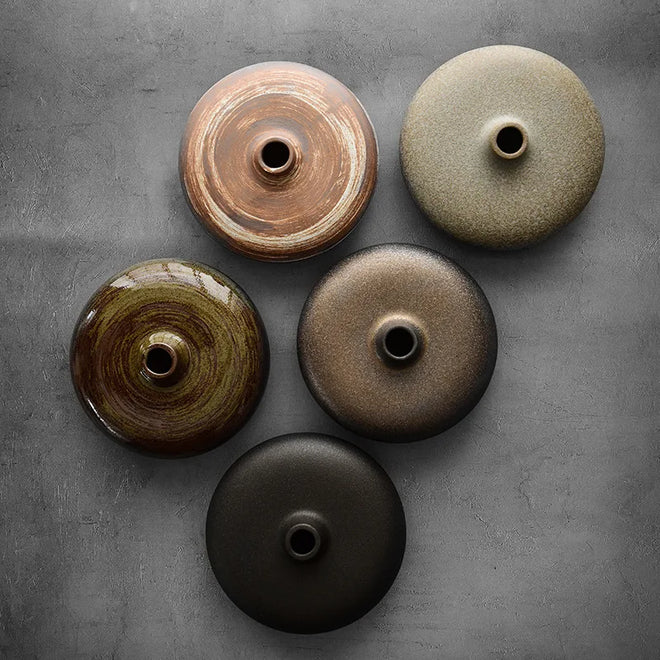
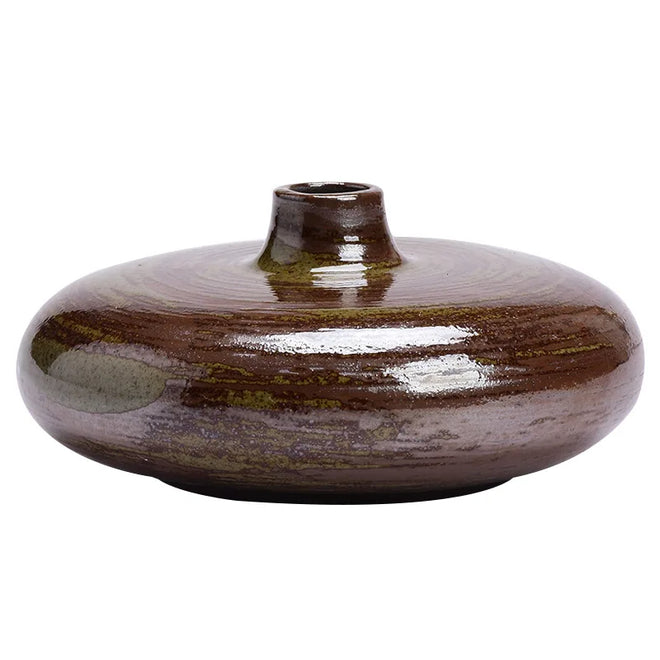
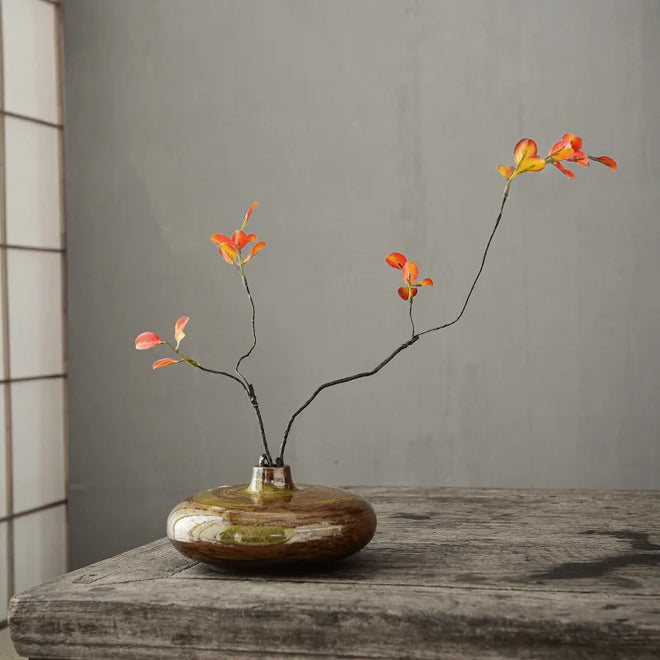
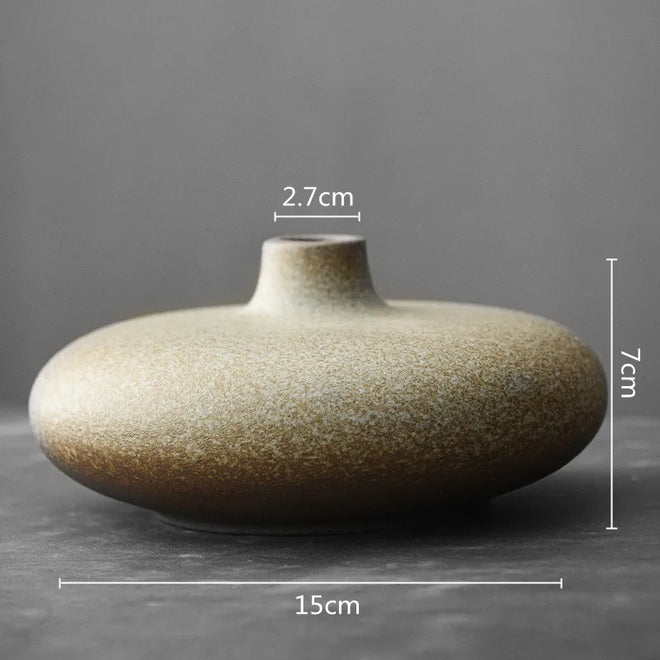
Accents are the cheapest way to shift a room's style because you are not replacing furniture. A ceramic vase, a textured table lamp, or a set of figurines can move a space toward Nordic, Japandi, or contemporary without a renovation. The Finishing Touch Decor carries pieces like the Brushed Handmade Ceramic Modern Minimalist Vases at $106 and the Abstract Embrace Set of Ceramic Figurines at $183, and free shipping kicks in on orders over $50.