

Table of Contents
- Why a Cream and Green Rug Works in Any Living Space
- Cream and Green Rug Options Worth Buying in 2026
- Sage Green Area Rug: Choosing the Right Shade
- Rug Size Guide for Living Rooms: Getting the Fit Right
- How to Style a Green Rug with Complementary Decor
- Materials, Care, and Durability for High-Traffic Homes
- Frequently Asked Questions
Last Updated: September 20, 2026
Why a Cream and Green Rug Works in Any Living Space
A cream and green rug works in every room because it pairs a neutral base with a color that reads as calm rather than cold. This guide from The Finishing Touch Decor, LLC breaks down which shades, sizes, and materials earn their place in a high-traffic home in 2026.
Cream and Green Rug Options Worth Buying in 2026
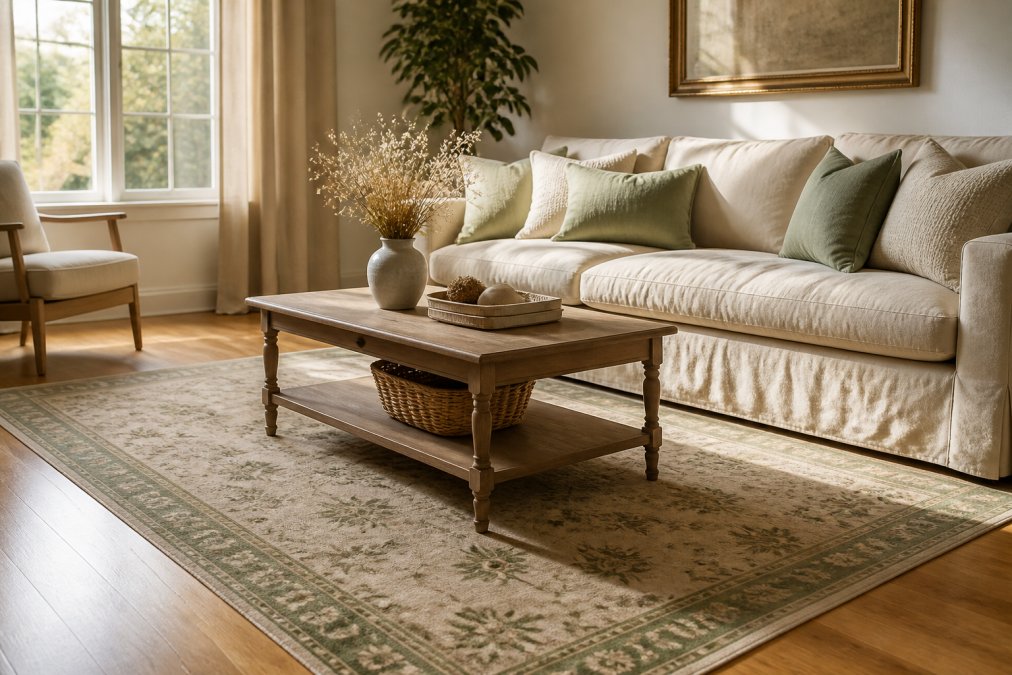
Four rugs in this collection do the cream-and-green job well at very different price points.
| Rug | Price | Material | Best For |
|---|---|---|---|
| French Quatrefoil Cream Thick Area Rug | $357.00 | Polyester, approx. 1cm thick | Living rooms and bedrooms |
| Turkish Moroccan Pattern Beige Area Rug | $437.00 | Soft, easy-clean, approx. 1cm thick | Entryways and studies |
| Dark Garden Floral Print Soft Area Rug | $72.00 | 100% polyester | Budget refreshes, boho rooms |
| Large Beige Moroccan Pattern Tassel Light Area Rug | $318.00 | Polypropylene and polyester, approx. 1.2cm | Cozy, textured living rooms |
French Quatrefoil Cream Thick Area Rug
The French Quatrefoil Cream Thick Area Rug is the most polished pick here. Its quatrefoil pattern reads as French Country without shouting, and the plush polyester build at roughly 1cm thick feels soft underfoot.

Turkish Moroccan Pattern Beige Area Rug
Where the Quatrefoil whispers, the Turkish Moroccan Pattern Beige Area Rug speaks. The geometric pattern is bolder, the Wilton construction gives it a dense, wear-resistant surface, and the breathable cotton backing keeps it from sliding.

Dark Garden Floral Print Soft Area Rug
At $72.00, the Dark Garden Floral Print Soft Area Rug is the entry point: 100% polyester with a garden floral motif, leaning hard into bohemian and maximalist styling.

Large Beige Moroccan Pattern Tassel Light Area Rug
The Large Beige Moroccan Pattern Tassel Light Area Rug is the middle ground, and for many living rooms the right answer. The tassels add texture, the geometric pattern layers easily with other prints, and the polypropylene-polyester blend resists fading and pilling.
It is hand wash, moisture-proof, and anti-static.
Sage Green Area Rug: Choosing the Right Shade
Sage, olive, emerald, and forest green all behave differently depending on how much natural light a room gets, and whether that light is warm or cool.
- Sage: Blue-leaning and grayed down. The most forgiving shade, best in sunlit rooms and small spaces where a saturated green would feel heavy.
- Olive: Yellow-leaning and earthier. Pairs beautifully with cream, brass, and natural wood, and holds up in north-facing rooms with cool, indirect light.
- Emerald: Saturated and dramatic, with a strong blue undertone. Use it as the focal point, not an accent, in a room with enough light to keep it from reading almost black.
- Forest: Deep and grounding, also blue-leaning. Works best in larger rooms with plenty of light, where the depth has space to breathe.
Match the Shade to Your Light Direction
North-facing rooms receive cool, indirect light all day; south-facing rooms get warm, direct light. That difference changes how a green rug looks on the floor:
- In a north-facing room, cool light pushes a blue-leaning sage cooler and slightly gray; a yellow-leaning olive or warm sage holds its color better.
- In a south-facing room, direct warm light can make a yellow-leaning olive look almost golden by late afternoon; a blue-leaning sage or emerald stays truer.
- East-facing rooms shift from cool morning to warm afternoon light, so a mid-tone sage is the safest middle ground.
- West-facing rooms get the reverse, warm morning, cooler evening, so a balanced sage or soft olive works in both halves of the day.
The Undertone Test Before You Buy
Fluorescent light is green-biased, which can flatter green rugs.
Before you commit:
- Order swatches, or at minimum, view the rug in daylight before you buy.
- Look at the swatch against plain white paper. The paper neutralizes surrounding color and makes the blue or yellow undertone obvious.
- Check the swatch at the time of day you actually use the room. A rug that looks right at noon can look flat at 8 p.m. under warm bulbs.
- Compare the swatch to your sofa and floor, not the wall, floor and upholstery are the surfaces the rug sits between.
Cream Is Not One Color Either
The cream half of a cream and green rug carries its own undertone, and it matters just as much. A warm cream with a yellow or beige cast softens olive and forest greens; a cool cream with a gray or white cast sharpens sage and emerald. Against cool gray walls, a warm cream rug reads slightly yellow, fine for warmth, wrong for a crisp, modern look.
French Quatrefoil Cream Thick Area Rug →
Rug Size Guide for Living Rooms: Getting the Fit Right
A living room rug should extend at least 6 inches beyond the front legs of your main seating. That single rule solves most sizing problems before you measure anything.
How to Style a Green Rug with Complementary Decor
Learning how to style a green rug comes down to one principle: let the green lead and keep everything else quiet. Cream, oatmeal, warm white, and natural wood are your allies. Brass and aged gold add warmth without competing.
What Furniture Colors Pair With Cream and Green
Green sits opposite red on the color wheel, which is why green rugs look so good against warm wood, the orange-red tones in wood are a natural complement, not a clash. That relationship drives the pairings below:
- Warm woods (oak, walnut, teak, acacia): The safest pairing. Their orange undertones complement green directly and echo the cream, working with every shade from sage to forest.
- Cool woods (ash, maple, gray-washed or whitewashed finishes): These lean gray or yellow-green and can make a warm cream rug look dingy. With cool wood floors, choose a cooler cream and a blue-leaning green.
- Black and dark espresso: High contrast. A deep forest or emerald rug against black furniture reads dramatic and modern; a pale sage against black can look washed out.
- Cream, ivory, and oatmeal upholstery: The classic pairing. Keeps the rug as the color moment and lets the green do all the talking.
- Navy and denim blue: A blue-green rug (sage, emerald) shares an undertone with navy, so the two read as a family rather than a contrast. This is the easiest non-neutral pairing to get right.
- Terracotta, rust, and warm clay: The complementary move. Use it sparingly, one accent, not a whole wall, or the room tips into a 1970s palette.
Metal Finishes: Brass, Gold, Nickel, and Black
Metal finish is the detail most styling guides ignore, and it's the one that makes a room feel finished:
- Brass and aged gold: Warm, yellow-leaning metals flatter olive and warm sage greens, the most forgiving pairing for a cream and green rug.
- Polished nickel and chrome: Cool, blue-leaning metals sharpen sage and emerald. They can look cold against olive, so balance with warm wood or a textured cream throw.
- Matte black and oil-rubbed bronze: Grounding and modern. They work with any green shade but read best with deeper greens and cream rather than pale sage.
- Mixed metals: A common pattern in current interiors is one warm metal plus one cool metal, repeated at least twice each. Pick one as the dominant finish and let the other appear only in small pieces.
Rug Layering: The Designer Move Competitors Skip
Layering a smaller patterned rug over a larger flatweave base adds depth and defines zones in open-plan living spaces without adding walls.
How to layer it correctly:
- Start with the base. A large, low-pile neutral, jute, sisal, or flatweave cotton, sized to cover the full seating area, usually 8x10 or 9x12.
- Add the accent on top. Your cream and green rug goes over the base, sized to sit under the front legs of the main seating or centered under a coffee table. A 5x8 over a 9x12 is the most common proportion.
- Leave a visible border. Aim for roughly 12 to 24 inches of the base rug showing on all sides. Less looks accidental; more makes the accent rug look like a doormat.
- Keep the piles different. A flat base under a plush accent (or the reverse) reads as deliberate. Two thick piles stacked create a trip hazard and a lumpy surface.
- Use a pad under the top rug. A thin non-slip pad keeps the accent rug from creeping on the base, especially in high-traffic rooms.
Materials, Care, and Durability for High-Traffic Homes
Polyester and polypropylene rugs handle high-traffic homes and clean easily. Wool lasts longer but costs more and needs careful maintenance.
- A flatweave or low-pile construction, which traps less dirt
- Stain-resistant or easy-clean fibers (polypropylene, polyester)
- A non-slip backing or a separate rug pad
- Reversible construction, which doubles the wear life
Frequently Asked Questions
What colors go well with a cream and green rug?
Cream and green rugs pair naturally with warm neutrals like beige, taupe, and soft white. For contrast, try blush pink, mustard yellow, or navy blue. Earthy tones like terracotta and rust also work well. If your rug leans sage green, keep furniture in light wood or cream upholstery. For deeper olive or emerald shades, darker wood tones and brass accents add warmth without clashing. The goal is to let the rug anchor the room while other pieces support its palette.
Are cream and green rugs easy to keep clean?
It depends on the material. Polyester and polypropylene rugs resist stains and clean up with mild soap and water. Wool rugs need gentler care but naturally repel dirt. For high-traffic areas, look for rugs labeled stain-resistant or washable. The French Quatrefoil Cream Thick Area Rug uses plush polyester, which handles everyday spills well. Vacuum regularly and blot stains immediately rather than rubbing. A rug pad underneath adds cushioning and keeps the rug from shifting, which reduces wear over time.
How do I choose the right size rug for my living room?
Measure your room dimensions first. For a standard living room, an 8x10 or 8x11 rug fits most seating arrangements. The front legs of your sofa and chairs should sit on the rug, with at least 6 to 8 inches of floor visible around the edges. If you have a large open floor plan, go bigger. A rug that is too small makes the room feel disconnected. Use painter's tape to map out the size on your floor before buying.
What interior design styles work best with green and cream patterns?
French Country, Coastal, Bohemian, and Contemporary styles all work well with cream and green rugs. French Country leans toward floral or quatrefoil patterns in soft sage and cream. Coastal designs favor lighter greens with natural fiber textures. Bohemian spaces handle bold geometric or Moroccan patterns. Contemporary rooms suit flatweave or abstract designs in muted green tones. The Turkish Moroccan Pattern Beige Area Rug, for example, brings a retro geometric look that suits eclectic and modern interiors alike.
Should I choose a washable rug for high-traffic areas?
Washable rugs are practical for homes with pets or kids, but not all washable rugs hold up over time. Check the material first. Polyester and polypropylene blends handle machine washing better than wool or natural fibers. If you prefer wool, choose a low-pile or flatweave construction and spot-clean instead. The Grey Kilim Herringbone Woven Eco-friendly Area Rug is flatweave and reversible, giving it twice the wear life. For high-traffic zones, stain resistance and durability matter more than the washable label alone.