

Table of Contents
- 1. Natural and Woven Textures
- 2. Coastal Color Palette Ideas for a Serene Space
- 3. Light and Airy Window Treatments
- 4. Slipcovered Furniture for Relaxed Elegance
- 5. Natural Wood Elements and Whitewashed Finishes
- 6. Layering Textiles for Comfort and Contrast
- 7. Organic Materials: Jute, Rattan, and Linen
- 8. Modern Coastal Interior Design: Blending Old and New
- Frequently Asked Questions
Last Updated: September 19, 2026
1. Natural and Woven Textures
Coastal home decor starts with texture, not color. Natural fibers like jute, rattan, and linen bring the organic touch that makes a room feel like a seaside retreat rather than a theme park.
A common mistake is treating texture as an afterthought. Woven textures need contrast to register. Pair a chunky braided jute rug with smooth slipcovers, or set a grasscloth wall against crisp linen curtains, so the eye has something to compare.
Start here:
- Choose one large woven piece as your anchor, like a flat-woven jute rug.
- Add one mid-size woven accent, such as a rattan side table or decorative baskets.
- Finish with a small woven detail, like a braided cotton rope curtain tieback.
That progression keeps the textural contrast intentional instead of cluttered.

2. Coastal Color Palette Ideas for a Serene Space
The best coastal color palette ideas lean on chalky whites, sandy neutrals, and muted blues rather than bright turquoise. Those unhurried colors create the serene atmosphere coastal rooms are known for.
Build the palette in three layers:
- Base: chalky whites and soft off-whites for walls and large upholstery
- Mid-tone: sandy neutrals and driftwood grays for rugs, wood, and woven pieces
- Accent: muted sage, sea blue, and soft navy for pillows, art, and ceramics
A common mistake is adding too many blues at once. Pick one blue, then let the neutrals do the rest of the work.
3. Light and Airy Window Treatments
Window treatments decide whether a room feels open or closed off. Linen curtains in an unlined, floor-skimming length let light filter through while softening the window frame, and they suit both coastal and modern coastal interior design.
Skip heavy blackout panels and dark valances. Instead, hang a simple rod wide enough that the panels stack mostly off the glass, then hold them open with a tieback.
For renters, magnetic tiebacks are the practical choice because they need no drilling. The Braided Cotton Rope Magnetic Tieback Curtain Holder ($22.00) clips on and off in seconds, and the Circular Wood Magnetic Curtain Holder Tiebacks - Set of 2 ($28.00) adds a warm wood note that ties into the natural wood elements elsewhere in the room.

4. Slipcovered Furniture for Relaxed Elegance
Slipcovers are the single easiest way to get relaxed elegance without a custom upholstery bill. A washable slipcover in linen or cotton canvas softens a sofa's silhouette, hides everyday wear, and lets you change the look seasonally.
What most guides miss is the fit question. A loose slipcover looks intentional; a baggy one looks like a bedsheet.
5. Natural Wood Elements and Whitewashed Finishes
Natural wood elements keep a coastal room from floating away into all-white sameness. Whitewashed wood finishes are the classic move: they lighten the grain while keeping the texture visible, which is exactly the balance coastal rooms need.
Where whitewashing works best:
- Picture frames and mirror surrounds
- Side tables and console tops
- Ceiling beams and simple shelving
- Curtain rods and tieback hardware
6. Layering Textiles for Comfort and Contrast
Layering textiles is what turns a styled room into a comfortable one. The formula is simple: one smooth layer, one nubby layer, one soft layer, repeated across the sofa, bed, and floor.
Sea Blue Hand Blown Glass Conch Shell →
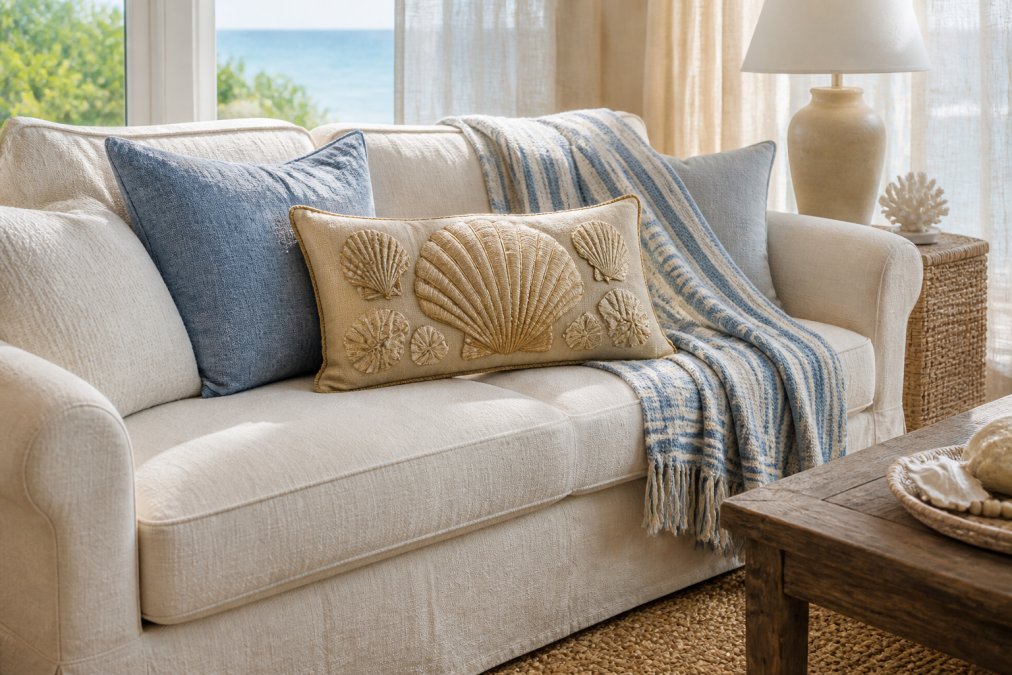
A practical layering sequence:
- Foundation: a plush area rug to warm the floor
- Structure: slipcovered seating in a breathable fabric
- Softness: a lightweight throw draped over one arm
- Accent: one or two throw pillows in the accent color
7. Organic Materials: Jute, Rattan, and Linen
Jute, rattan, and linen carry the organic touch that defines coastal chic, and each one has a different job. Jute grounds the floor. Rattan adds sculptural shape. Linen softens light and upholstery. But these are living materials. Here is some care guidance.

| Material | Best Used For | Care Notes |
|---|---|---|
| Jute | Area rugs, floor texture | Vacuum on low suction, rotate quarterly, spot clean with mild soap |
| Rattan | Baskets, side tables, lighting | Dust weekly, keep out of direct sun, re-oil dry strands |
| Linen | Curtains, slipcovers, bedding | Cold wash, air dry, accept soft creasing |
Jute: expect the shed, then settle in
A new jute rug sheds loose fibers for the first two to four weeks. That is normal, not a defect, and it stops once the weave tightens. Vacuum on the lowest suction setting with a hard-floor attachment rather than a beater bar, which can pull the braid apart. Rotate the rug 180 degrees every three months so foot traffic wears it evenly instead of carving a path down the center.
Rattan: the sun is the enemy
Rattan dries out and cracks when it sits in harsh, direct sun. Keep rattan side tables and baskets out of the direct path of a west-facing window, and dust them weekly with a dry microfiber cloth so grit does not work into the weave. Once or twice a year, wipe the strands with a lightly oiled cloth, a few drops of linseed or mineral oil on a rag is enough, to restore flexibility and prevent brittleness.
Linen: creasing is the point
Linen creases, and that is part of its character, not a defect. Wash curtains, slipcovers, and bedding in cold water on a gentle cycle, then air dry. A hot dryer is what shrinks and stiffens linen, so resist it. If you want a crisper look, press while the fabric is still slightly damp. Linen also softens with every wash.
8. Modern Coastal Interior Design: Blending Old and New
Modern coastal interior design works by pairing one vintage or weathered piece with clean contemporary lines. Too much new and the room feels like a showroom. Too much old and it tips into nautical kitsch.
The blend that holds up:
- A vintage travel print above a modern slipcovered sofa
- A traditional woven rug under a contemporary coffee table
- Antique glass or ceramic accents on open shelving
The small-space version
Coastal style does not require square footage. In a studio or one-bedroom, the trick is to let one element carry the theme instead of spreading it across every surface. Pick a single hero, a jute rug, a rattan pendant, or a large framed print, and let the rest of the room stay quiet and neutral. A 5x8 jute rug does the same grounding work in a small living room that an 11x15 does in a great room, at a fraction of the cost and footprint.
The budget version
You do not need to buy the whole room at once, and buying it all at once is the fastest way to make a coastal room look dated. Buy the anchor pieces first, the rug, the slipcover, the window hardware, live with them for a month, then add accents that respond to what the room actually needs. A $36 framed canvas print and a $22 set of magnetic tiebacks can shift the mood of a room more than a single $500 furniture piece, because they touch the two places the eye lands first: the wall and the window.
Frequently Asked Questions
What are the key elements of coastal decor?
The core elements include natural textures like jute and rattan, a light color palette of chalky whites and muted blues, breathable fabrics such as linen, and light wood finishes. Layering these creates a relaxed, airy feel. Key pieces include woven rugs, slipcovered furniture, and organic accents like glass or resin sculptures. The goal is a serene atmosphere that feels collected, not cluttered. Focus on texture and light to achieve the look.
What is the difference between coastal and beachy decor?
Coastal decor is more refined and draws from the natural landscape, using muted blues, sandy neutrals, and organic materials like driftwood and jute. Beachy decor is often more literal, featuring bright colors, novelty signs, and overt nautical themes. Coastal style feels like a year-round seaside retreat, while beachy decor is more seasonal and playful. For a sophisticated look, lean toward coastal elements like linen curtains and whitewashed wood.
How can I achieve a modern coastal look on a budget?
Start with affordable foundational pieces like a braided woven fiber area rug or a framed canvas travel print. Add texture with a striped knit throw blanket or a shell-adorned lumbar pillow cover. Shop your home for items that fit the palette, like white ceramics or woven baskets. Focus on one or two key accents, such as a hand-blown glass conch figurine, to make a statement without overspending. Free shipping on orders over $50 helps keep costs down.
What materials are best for coastal home styling?
Natural fibers like jute, rattan, cotton, and linen are ideal because they add texture and breathe well. Polyester blends work for pillow covers and rugs that need durability. Resin and glass are great for sculptural accents that resist moisture. For wood, choose whitewashed or light oak finishes. Avoid heavy, dark woods and synthetic fabrics that trap heat. These materials create the organic touch and relaxed elegance that define coastal design.
How do I maintain coastal decor materials?
Jute rugs should be swept gently and spot cleaned with mild soap and water. Hand wash knit throws and acrylic blankets to preserve their shape. Dust resin and glass sculptures with a soft cloth. For pillow covers, unzip and machine wash on a gentle cycle, then air dry. Keep linen curtains out of direct sunlight to prevent fading. Regular, gentle care keeps natural fibers and finishes looking fresh for years.