

Table of Contents
- French Country vs Farmhouse Style: Side-by-Side Comparison
- Defining French Country Style
- Defining Farmhouse Style
- Modern Farmhouse vs French Country: Key Differences
- The French Country Color Palette: Soft Pastels and Earth Tones
- How to Mix Interior Design Styles: Blending French Country and Farmhouse
- Budget-Conscious Implementation and Sustainability
- Conclusion
- Frequently Asked Questions
Last Updated: September 22, 2026
French Country vs Farmhouse Style: Side-by-Side Comparison
The french country vs farmhouse style debate comes down to one question: refined elegance or relaxed comfort? French country leans ornate and romantic, with curved silhouettes and soft pastels. Farmhouse stays utilitarian and sturdy, built around distressed wood and neutral tones. This guide from The Finishing Touch Decor, LLC breaks down both so you can choose with confidence.

Quick Comparison Table
| Feature | French Country | Farmhouse |
|---|---|---|
| Color palette | Soft pastels, earth tones, gold accents | Neutral palette, white, black, warm wood |
| Materials | Linen, toile fabric, natural stone | Distressed wood, galvanized metal, cotton |
| Furniture shape | Curved forms, ornate detailing | Straight lines, functional design |
| Hardware | Brass hardware, decorative molding | Wrought iron, matte finishes |
| Overall feel | Refined aesthetic, rustic elegance | Utilitarian, vintage charm |
Defining French Country Style
French country style is rooted in the rural homes of provincial France, combining rustic elegance with refined, ornate detailing: curved furniture legs, toile fabric, and natural stone surfaces. The look feels collected rather than decorated. Color drives much of the identity: soft pastels like lavender, butter yellow, and dusty blue alongside warm earth tones, with brass hardware and decorative molding adding polish without formality.

Defining Farmhouse Style
Farmhouse style is built on utilitarian function and honest materials, drawing from working farmhouses rather than decorated estates. Distressed wood, exposed beams, and galvanized metal define the look. Nothing is precious; everything gets used. Modern farmhouse keeps the rustic bones but adds cleaner lines and more white. Shiplap walls, apron-front sinks, and a farmhouse table anchor most rooms, softened by linen textiles and cotton slipcovers.
Modern Farmhouse vs French Country: Key Differences
Modern farmhouse vs french country comes down to decoration level, not rural roots. Farmhouse keeps things plain and functional; French country adds curves, ornament, and a softer color story.
Color Palettes and Materials
French country palettes center on soft pastels and earth tones warmed by gold or brass, with refined materials: linen, toile fabric, natural stone, and aged wood with visible patina.
Furniture Silhouettes and Hardware
French country furniture favors curved forms, cabriole legs, and ornate detailing, with brass and aged bronze hardware and decorative molding. Farmhouse furniture uses straight lines and simple joinery, with a plank-top farmhouse table as the defining piece and wrought iron or matte hardware chosen for durability.
The French Country Color Palette: Soft Pastels and Earth Tones
The french country color palette starts with soft pastels: lavender, sage, dusty rose, and butter yellow. Layer in earth tones like terracotta, ochre, and warm cream. Finish with aged gold or brass for warmth.
How to Mix Interior Design Styles: Blending French Country and Farmhouse
Learning how to mix interior design styles starts with picking a dominant style and letting the other play a supporting role. Choose farmhouse as the base for its neutral, functional bones. Then layer French country accents for warmth and refinement.
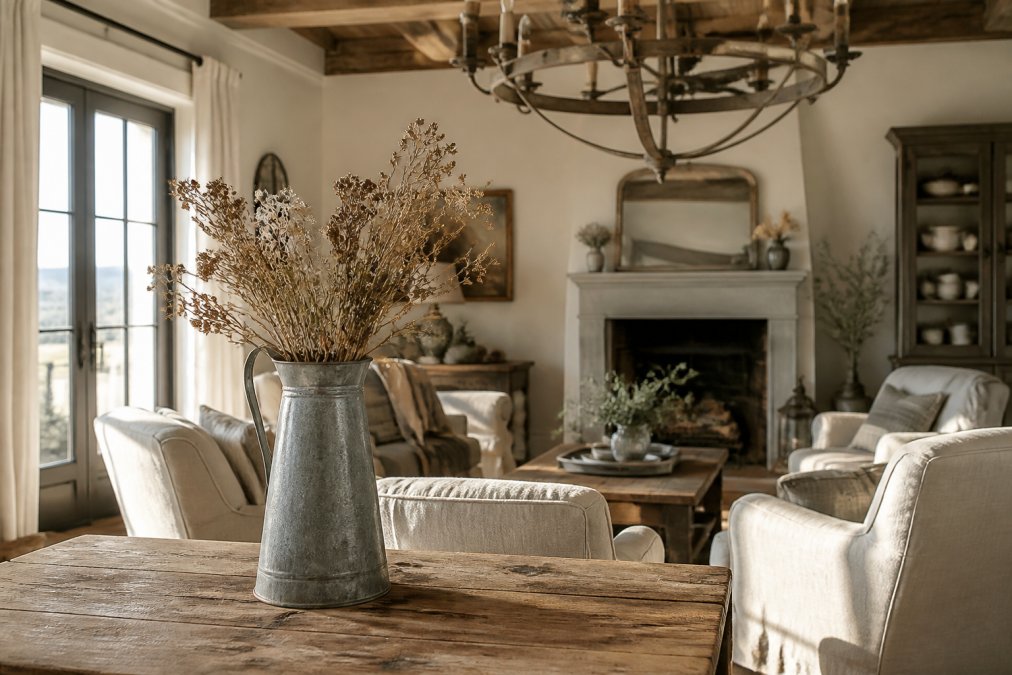
A few rules keep the blend from turning chaotic:
- Keep the farmhouse table, add French country chairs with curved legs
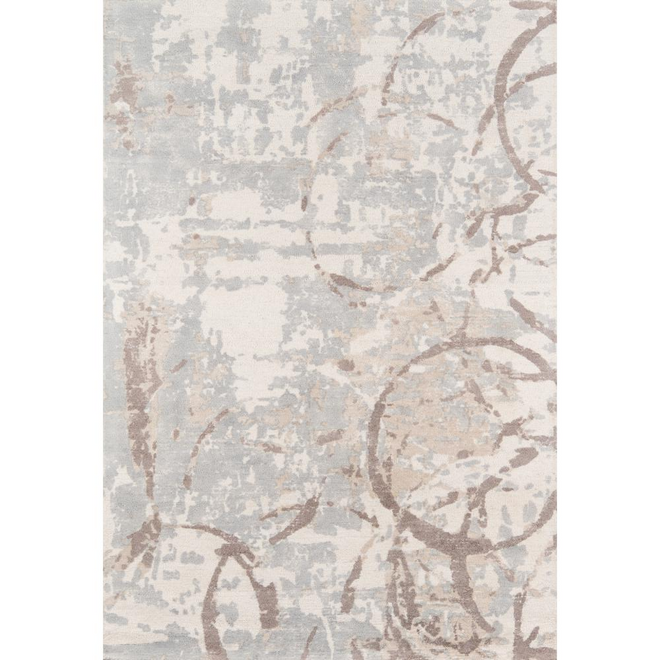
- Pair neutral farmhouse walls with toile fabric pillows or a soft pastel rug
- Swap standard farmhouse hardware for brass on one or two pieces
- Use one ornate mirror or antique as the focal point, not five
- Repeat one accent color across both styles to tie the room together
Room-by-Room Application: Where the Ratio Changes
In practice, the ratio shifts room by room because each space has a different job: a kitchen must survive daily cooking, a bedroom only has to feel calm.
| Room | Dominant Style | Accent Style | Key Move | Why It Works |
|---|---|---|---|---|
| Kitchen | Farmhouse | French country | Apron-front sink plus brass cabinet pulls | Hardworking surfaces stay durable; brass warms the white and wood |
| Living room | French country | Farmhouse | Curved sofa plus distressed wood coffee table | Curves soften the seating zone; the rough table keeps it from feeling formal |
| Bedroom | French country | Farmhouse | Toile bedding plus a simple plank headboard | Toile carries the romance; the plain headboard keeps it restful |
| Dining room | Farmhouse | French country | Farmhouse table plus curved accent chairs | The table anchors family use; curved chairs add the French note |
| Entryway | Either | Either | Vintage pitcher vase plus neutral wall hooks | Small space, low commitment, the easiest place to test the blend |
| Bathroom | Farmhouse | French country | Shiplap or beadboard plus an aged brass faucet | Moisture-friendly surfaces with one warm metal accent |
How to Blend on a Budget
You don't need to replace furniture to shift a room's character. Work cheapest first:
- Textiles, swap pillow covers, throws, and a runner. Lowest cost, fastest visual change.
- Hardware, cabinet pulls and knobs are sold individually and can be changed in an afternoon with a screwdriver.
- Lighting, a single fixture swap changes the mood of an entire room.
- Accents, vases, trays, and one framed piece.
- Furniture, last, and only one anchor piece per room.
Sourcing Authentic Pieces vs. Replicas
- Is the wear real? Hand-worn edges on wood and naturally aged brass patina cannot be faked convincingly. Factory distressing is uniform; real wear is not.
- Will it hold up? Solid wood and true metal outlast veneer and resin. A heavier piece is usually the better buy.
- Can it be repaired? Antiques were built to be fixed. Replicas are often built to be replaced.
Lighting is the most overlooked swap. The Rustic Wood Beam Farmhouse Vintage Chandelier Pendant Lamp brings farmhouse structure through its solid wood beam, while the handcrafted finish adds the warmth French country rooms rely on. It ships with LED bulbs included and covers a 15 to 30 square meter space, which suits most dining rooms and open kitchens.
A Simple Checklist to Run Before You Buy
- Choose your dominant style for the room
- Pick one anchor piece, ideally vintage or reclaimed
- Add two to three accent pieces in the secondary style
- Repeat one color across both styles
- Stop when the room feels collected, not staged
Budget-Conscious Implementation and Sustainability
Budget-conscious implementation starts with accents, not furniture, swap vases, pillows, and lighting first, since those cost the least and shift a room's character fastest.
Shabby Chic French Country Vintage →
The Three-Tier Budget Framework
Think of every purchase as belonging to one of three tiers. Spend deliberately across all three rather than loading up on one.
| Tier | What It Covers | Typical Share of Budget | Examples |
|---|---|---|---|
| Tier 1, Accents | Small, swappable pieces | Smallest share | Vases, pillow covers, trays, framed art, hardware |
| Tier 2, Soft Goods | Textiles and lighting | Middle share | Rugs, curtains, slipcovers, a single light fixture |
| Tier 3, Anchor Pieces | One statement item per room | Largest single spend | A dining table, a sofa, a reclaimed beam mantel |
Accents carry the style signal.
Get the Look for Less: Specific Swaps
- Toile fabric → a toile-print pillow cover or a single framed panel instead of full upholstery
- Natural stone surfaces → a stone-look tray or a small marble-top side table rather than a full countertop
- Brass hardware → replace cabinet pulls only, not the cabinets
- Reclaimed beams → a salvaged beam used as a shelf or mantel instead of a structural install
- Antique furniture → one genuine antique as the focal point, surrounded by new pieces
- Ornate mirror → a single arched or scalloped mirror as the room's one decorative moment
The rule: one authentic or high-impact piece per room, then fill the rest with affordable supporting pieces.
Sustainability and Sourcing
Where to look:
- Estate sales
- Consignment shops
- Architectural salvage yards
- Online marketplaces
- Local auctions
When buying secondhand, check structural soundness before aesthetics. Loose joints, active woodworm, and cracked stone are expensive to fix.
What to Skip
Not every shortcut is worth taking. Skip:
- Full-room matching sets
- Heavy faux-distressing
- Trend-driven accent colors
- Oversized single purchases
A Simple Checklist to Run Before You Buy
- Choose your dominant style for the room
- Pick one anchor piece, ideally vintage or reclaimed
- Add two to three accent pieces in the secondary style
- Repeat one color across both styles
- Stop when the room feels collected, not staged
Lighting is the most overlooked swap. The Rustic Wood Beam Farmhouse Vintage Chandelier Pendant Lamp brings farmhouse structure through its solid wood beam, while the handcrafted finish adds the warmth French country rooms rely on. It ships with LED bulbs included and covers a 15 to 30 square meter space, which suits most dining rooms and open kitchens.

Conclusion
Choosing between these styles, or blending them, comes down to how much decoration you want in your daily space. Farmhouse keeps things functional and forgiving; French country adds romance and polish. Most homes work best with a clear dominant style and a few deliberate accents from the other.
Frequently Asked Questions
What is the difference between French country and farmhouse decor?
French country decor leans elegant with curved furniture, ornate detailing, and soft pastels, while farmhouse style is more utilitarian with distressed wood, neutral palettes, and functional design. French country draws from provincial influence and refined aesthetics, whereas farmhouse embraces rustic elegance and vintage charm. Both share natural materials and cozy atmosphere, but French country feels more formal and farmhouse feels more relaxed and casual.
Is French country still in style in 2026?
Yes, French country remains in style in 2026, though it has evolved. The look now blends heirloom pieces with modern farmhouse touches, focusing on quality materials and sustainable sourcing.
How can you blend French country and farmhouse styles?
Start with a neutral color palette of earth tones and soft pastels as your base. Add farmhouse staples like a farmhouse table and distressed wood, then layer in French country touches such as toile fabric, curved furniture, and ornate detailing. Use natural materials like linen textiles and wrought iron to bridge both looks. A vintage galvanized pitcher vase or ceramic pitcher vase can tie the styles together on a shelf or mantel.
Does French country decor work in modern homes?
French country decor works in modern homes when you edit the look. Choose a few statement pieces like a French Country Accent Table with turned legs instead of filling every corner. Keep walls light, use matte finishes, and add modern lighting. The key is balancing old-world charm with current proportions and materials.
What are the key characteristics of French farmhouse design?
French farmhouse design combines the rustic warmth of farmhouse style with the refined elegance of French country. Look for exposed beams, natural materials like wood and iron, and a neutral color palette with soft pastels. Furniture often features curved forms and decorative molding. Linen textiles, toile fabric, and vintage charm complete the look. It is less ornate than pure French country and more polished than American farmhouse.