

Table of Contents
- Why Command Strips Are Changing How We Hang Wall Art
- How to Hang Wall Art Without Nails Using Adhesive Strips
- Command Strip Weight Limits for Frames: What You Need to Know
- Removing Adhesive Strips from Drywall Without Damage
- Adhesive Strips vs. Traditional Hardware: A Comparative Analysis
- Long-Term Effects on Drywall and Environmental Impact
- Best Practices for Different Wall Textures and Finishes
- Conclusion: Making the Right Choice for Your Space
- Frequently Asked Questions
Last Updated: October 2, 2026
Why Command Strips Are Changing How We Hang Wall Art
Hanging art used to mean one thing: putting holes in your walls. For renters, that was a dealbreaker. For homeowners, it was a small commitment with a big annoyance factor. Command strips changed that equation, and they are now one of the most popular ways to hang wall art without nails. This guide from The Finishing Touch Decor, LLC walks through how these strips work, where they fall short, and how to use them without wrecking your drywall.

The core appeal is simple. Command strips use a stretchable foam adhesive that holds firm while you need it, then releases cleanly when you pull the tab. No drill. No anchors.
A common mistake is treating every strip like it can hold anything. It cannot.
Below, we break down the full process: prep, application, weight limits, and removal.
How to Hang Wall Art Without Nails Using Adhesive Strips
Hanging wall art without nails comes down to three things: the right strip size, a clean surface, and correct placement. Get any one of those wrong, and the adhesive fails.

The process itself takes about five minutes per piece once you know the steps. Most failures trace back to skipping surface prep.
Step-by-Step Application for a Secure Hold
- Wipe the wall with isopropyl alcohol and let it dry fully.
- Clean the back of the frame the same way.
- Press the strip to the frame for 30 seconds.
- Press the frame to the wall for another 30 seconds.
- Wait one hour before hanging, and 24 hours for heavier pieces.
- Remove the frame, then press it back firmly to set the bond.
Surface Preparation and Wall Texture Considerations
Adhesive strips need a non-friable surface. That means painted drywall, tile, glass, or metal. Skip anything that sheds or flakes.
Wall texture matters more than most people expect. A light orange-peel finish usually works. Heavy knockdown or popcorn texture does not give the adhesive enough contact area.
- Primed and painted drywall: best case, holds well
- Wallpaper: avoid, the strip can pull the paper
- Brick or concrete: needs mounting hardware instead
- Fresh paint: wait at least a week before applying
Command Strip Weight Limits for Frames: What You Need to Know
Command strip weight limits for frames are printed on every package, and ignoring them is the fastest way to a broken frame. A small strip holds a few pounds. Larger strips and picture-hanging pairs hold more, but the number assumes an ideal surface.
The listed capacity drops on textured walls, in humid rooms, and in high heat. Treat the package number as a ceiling, not a target.
Why the Package Number Is Not the Real Number
Adhesive holding power depends on two forces working together: shear strength (the adhesive resisting a downward slide) and peel strength (the adhesive resisting being pulled away from the surface at an angle).
That is why a strip rated for 4 pounds can fail under a 2-pound frame that sits slightly off the wall. The rating assumes perfect contact and pure shear.
Three factors cut capacity in practice:
- Surface texture: Every bit of texture reduces the contact area between adhesive and wall. Light orange-peel can cut effective capacity by roughly a quarter; heavy knockdown can cut it in half or worse.
- Humidity and heat: Moisture softens the adhesive foam and lets it creep. A bathroom that hits 70% relative humidity during showers, or a wall above a baseboard heater, will see bonds weaken over weeks, not months.
- Paint type: Flat and matte paints have more surface tooth than glossy or semi-gloss finishes. On a high-gloss wall, the adhesive has less to grip, and the strip can slide before it peels.
Matching Strip Size to Art Weight
| Art Type | Approx. Weight | Strip Type | Best For |
|---|---|---|---|
| Small unframed print | Under 1 lb | Small strip | Light posters, small canvases |
| Framed 8x10 photo | 1-2 lbs | Medium strip | Standard photo frames |
| Framed 16x20 print | 3-4 lbs | Large strip | Mid-size framed art |
| Heavy framed piece | 5+ lbs | Picture-hanging pair | Larger frames, use two points |
| Glass or mirror | Varies | Hardware recommended | Skip adhesive for safety |
A canvas print is lighter than a glass frame of the same size, which makes it a better fit for adhesive hanging. The Consumer Product Safety Commission guidance on home product safety is a useful reminder that anything above head height deserves extra caution.
The Two-Point Rule for Heavier Pieces
For anything over about 3 pounds, use two strips or a picture-hanging pair rather than one larger strip. Two points of contact do three things: they split the load, they resist rotation if the frame gets bumped from the side, and they give you a backup if one bond weakens. Place the pair near the top corners of the frame, not the center, so the frame hangs from its strongest points.
Removing Adhesive Strips from Drywall Without Damage
Removing adhesive strips from drywall without damage is easy if you follow one rule: never pull the strip straight out. Pull the tab straight down, slowly, parallel to the wall.
The adhesive stretches as you pull. That stretch is what releases the bond. Pull fast or at an angle, and you risk peeling paint instead.
- Hold the frame steady with one hand
- Pull the tab down with the other, slowly
- Keep the pull close to the wall, not away from it
- If the strip snaps, work the remaining tab out with your fingers
Troubleshooting Common Adhesive Failures
Adhesive failure usually has one of four causes. The strip was too small, the surface was dirty, the wall was textured, or the strip was old.
- Frame falls within hours: surface was not clean or dry
- Strip snaps on removal: pulled too fast or at an angle
- Paint peels with the strip: weak paint adhesion, common on fresh or cheap paint
- Bond weakens over months: humidity or heat, common in bathrooms
Adhesive Strips vs. Traditional Hardware: A Comparative Analysis
Adhesive strips win on damage-free hanging and rental-friendly use. Traditional hardware wins on weight capacity and long-term durability. The right pick depends on what you are hanging and where.
| Factor | Adhesive Strips | Traditional Hardware |
|---|---|---|
| Wall damage | None when removed correctly | Holes to patch |
| Weight capacity | Limited | High |
| Rental-friendly | Yes | No |
| Best for | Light to mid-weight art | Heavy or valuable pieces |
| Setup time | Minutes | Longer, needs tools |
For renters, the choice is obvious. For a heavy mirror in a family home, hardware still makes sense.
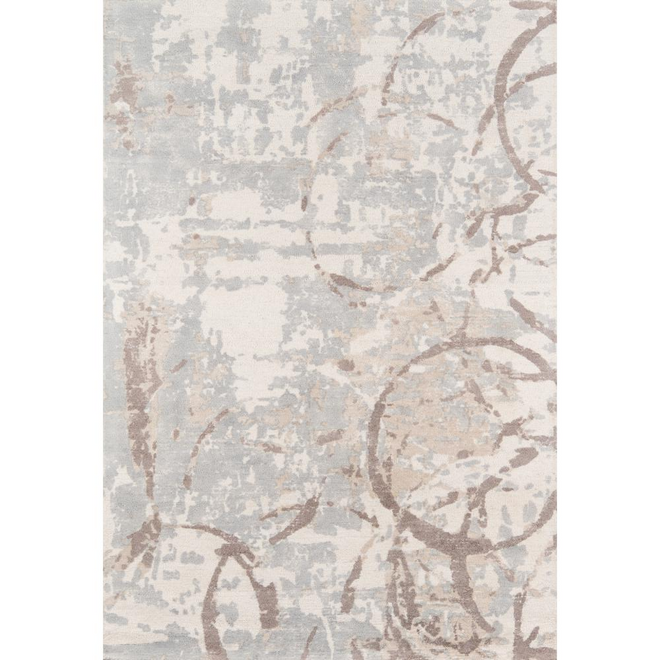
Neutral Abstract Lines Canvas Wall Art Prints →
Long-Term Effects on Drywall and Environmental Impact
Most guides stop at "damage-free." That is only true in the short term. What happens to drywall and paint after years of repeated adhesive use is a different question, and it is one the top-ranking articles almost never answer.
What Actually Happens to Paint Over Time
Adhesive strips do not pull drywall paper when removed correctly. They pull paint. The failure mode is not the strip ripping a hole in the wall; it is the strip taking a coin-sized patch of paint with it because the bond between paint and drywall was weaker than the bond between adhesive and paint.
That paint-to-drywall bond weakens in predictable situations:
- Fresh paint: Latex paint needs roughly a week to cure fully. Before that, the film is still soft and bonds poorly to the substrate. Strips applied too soon can lift paint on removal even if you pull perfectly.
- Cheap or thinned paint: Builder-grade flat paint and any paint thinned with water form a weaker film. These are the walls most likely to peel.
- Repeated application in the same spot: Each strip pulls a microscopic layer of paint. Do it five or six times in the same square inch, and you can wear through to the primer. This is the real long-term risk, and it is cumulative, not sudden.
- Previously patched walls: Spackle and joint compound are softer than drywall paper. Adhesive over a patched area can pull the patch.
A practical rule: rotate hanging spots for decor you swap often, and give a freshly painted wall at least a week before the first strip goes up.
The Environmental Trade-Off Nobody Quantifies
Adhesive strips are single-use plastic foam with a paper backing. They go in the trash after one job. Traditional hardware is reusable but leaves permanent holes that need patching, and patching consumes spackle, sandpaper, primer, and paint.
The honest comparison depends on how long the art stays up:
- Short-term or frequently rotated decor: Adhesive strips win on waste. A strip is a few grams of foam and paper. Patching a nail hole and repainting a spot uses far more material and energy.
- Permanent installation: Hardware wins. One nail or anchor holds for decades with zero recurring waste. Adhesive strips for the same piece would mean replacing strips every time you move the art, plus the risk of cumulative paint damage.
- Rental turnover: Adhesive strips win because the alternative is patching and repainting at move-out, which is a much larger material footprint.
The strips themselves are not recyclable in most curbside programs because the foam and adhesive are bonded together. That is a real limitation, and it is worth knowing before you commit to adhesive as your default method.
A Decision Framework for Long-Term Use
Ask three questions before choosing adhesive for a piece you plan to keep up for years:
- How heavy is it? Over 5 pounds, use hardware. The adhesive risk is not worth the waste savings.
- How often will it move? If it stays put for years, hardware causes less total waste and zero paint risk.
- What is the wall finish? Fresh, cheap, or glossy paint raises the peel risk. On those walls, hardware is the safer long-term choice even for light pieces.
For light decor you plan to swap often, adhesive strips are the gentler option for your walls. For a piece you will keep in place for years, hardware causes less waste over time.
Best Practices for Different Wall Textures and Finishes
Wall texture decides whether adhesive strips hold or fail. Smooth, primed, painted drywall is the ideal surface. The rougher the wall, the less contact the adhesive gets.
- Smooth painted drywall: full weight capacity
- Light orange-peel texture: works, reduce load slightly
- Heavy knockdown or popcorn: avoid adhesive, use hardware
- Wallpaper: skip adhesive, it can tear the paper
- Tile or glass: works well, clean first with isopropyl alcohol
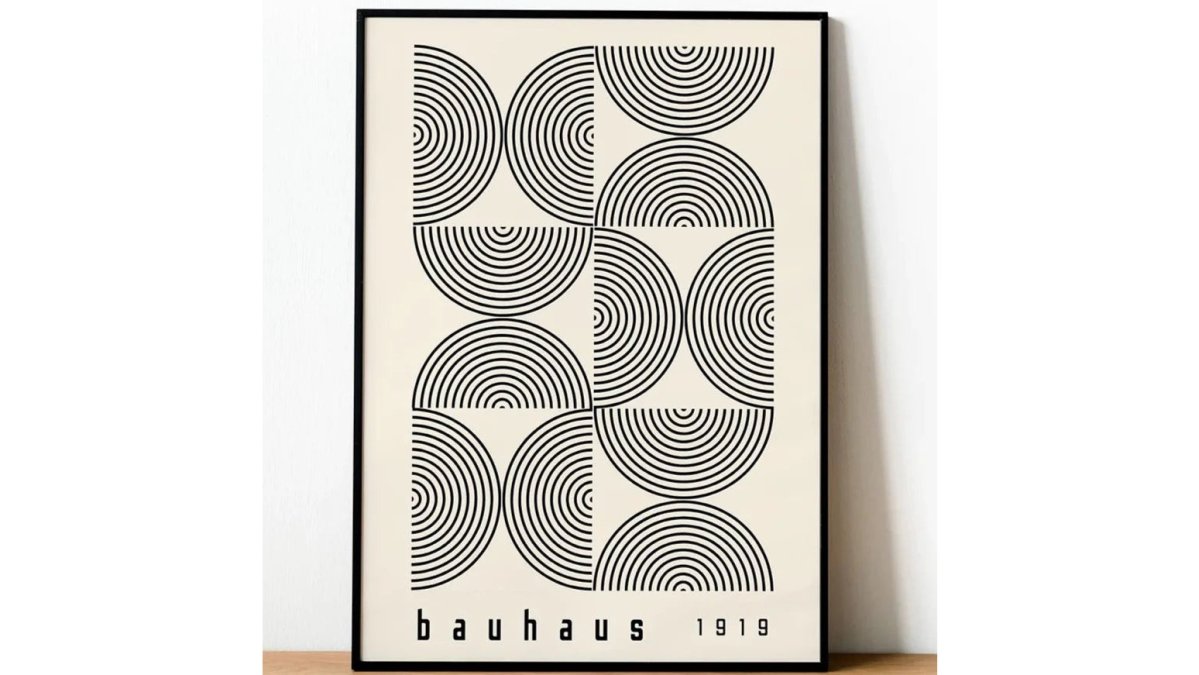
Canvas art is a smart pick for adhesive hanging because it is light and has a flat, firm backing. The American Society for Testing and Materials standards on adhesive performance sets the testing methods behind peel and shear strength, which is what keeps a strip stuck.
If you are building a gallery wall, start with lighter pieces and work up. Our Neutral Abstract Lines Canvas Wall Art Prints are a good starting point because they are unframed canvas, which keeps the weight down.
Conclusion: Making the Right Choice for Your Space
Choosing between adhesive strips and hardware comes down to weight, surface, and how long the art stays put.
At The Finishing Touch Decor, LLC, we stock lightweight canvas prints that pair well with adhesive hanging, plus a curated range of styles from French Country to Coastal and Bohemian.
Ready to refresh your space without picking up a drill? Browse our collection and find the piece that fits your wall.
Frequently Asked Questions
Are Command strips safe for all wall types?
Command strips work best on smooth, non-porous surfaces like painted drywall, tile, and finished wood. They are not recommended for rough textures, brick, or wallpaper, as the adhesive cannot form a secure bond. Always test a small area first and ensure the surface is clean and dry before applying.
How much weight can Command strips hold for wall art?
Weight capacity varies by strip size. Small strips typically hold up to 1 pound, medium up to 3 pounds, and large up to 5 pounds. For heavier pieces, use multiple strips or consider a picture-hanging kit. Always follow the manufacturer's weight limits and distribute weight evenly across the back of the frame.
Do Command strips leave residue on painted walls?
When removed correctly, Command strips are designed to leave no residue. Pull the tab slowly straight down, not outward, to release the adhesive. If any sticky residue remains, gently rub it off with your finger or a damp cloth. Avoid using harsh chemicals that could damage the paint.
Can you reuse Command strips for different art pieces?
No, Command strips are designed for single use. The adhesive loses its holding power once removed. Reusing strips can lead to unexpected falls and potential damage to your art or wall. Always use fresh strips when hanging a new piece, and keep spare strips on hand for quick swaps.