

Last Updated: October 23, 2026
Quick Summary
To style bookshelves like a professional, arrange books by color in groups, mix vertical and horizontal stacking, and balance 60% books with 40% decorative objects. Use the rule of threes for accessories, incorporate negative space, and distribute visual weight evenly across shelves for an intentional, curated look.
- Group books by color to create visual cohesion and use color blocking as a foundation for your display.
- Mix vertical and horizontal book stacking on the same shelf to create rhythm and visual interest.
- Apply the rule of threes by grouping decorative objects in odd numbers for a more natural, intentional appearance.
- Distribute decorative objects across all shelves rather than crowding them on top to maintain balance throughout.
- Leave negative space between objects to prevent visual overwhelm and make your styling feel intentional.
Table of Contents
- Start with a Clean Slate and Assess Your Shelf
- Choose a Color Scheme and Build Your Foundation
- How to Arrange Books on a Bookshelf for Maximum Impact
- Bookshelf Styling Rules That Create Visual Balance
- Bookshelf Decorating Ideas: Mixing Objects and Negative Space
- Bookshelf Styling Ideas for Living Room Displays
- Balance Books with Decorative Objects
- Style Bookshelves for Different Needs and Budgets
- Frequently Asked Questions
Start with a Clean Slate and Assess Your Shelf
Before you bring in a single decorative object, take everything off your bookshelf. Yes, everything. This step matters more than most people think.
When you clear the space, you see what you're actually working with. Notice the shelf depth, the height between shelves, and any damage or dust. Are there shelves that sag under weight? Do some areas get better light than others?
A clean slate also forces you to be intentional. You'll rediscover books you forgot you owned and decide which ones deserve a spot. This is your chance to edit ruthlessly.
Choose a Color Scheme and Build Your Foundation
Your color scheme anchors everything else. Without one, your bookshelf looks scattered no matter how well you arrange things.
Start by picking a dominant color from the books you're keeping. Look at the spines. Do warm tones dominate, or cool ones?
Next, choose one accent color that complements your dominant tone. This accent appears in your decorative objects, a vase, a frame, a small sculpture.
The foundation step is simple: arrange your books by color first. Group them by warm, cool, or neutral tones.
Explore Top 10 Interior Design Styles: How to Choose & Mix to understand how color palettes work across different design aesthetics, from French Country to Coastal to Bohemian.
How to Arrange Books on a Bookshelf for Maximum Impact
Books are your base. How you arrange them determines whether your bookshelf looks curated or chaotic.
Vertical and Horizontal Stacking
Most people stack all their books vertically. It's the default.
Vertical stacking works best for books with attractive spines. Stand them upright, spine out, so the color and title show. This is the standard library look.
Horizontal stacking (laying books flat) works for oversized books, art books, or books with beautiful covers. Lay a stack of 3-5 books horizontally on one shelf.
The rule: use both methods on the same shelf. Alternate between stacks to create visual interest without looking random.
Grouping by Color and Size
Group books by color to create color blocks across your shelves. A section of blues, then greens, then warm tones.
Within each color group, vary the book sizes. Put tall books at the ends and medium-sized books in the middle. This creates a gentle slope that's easier on the eye than a flat line.
Grouping by size alone (all tall books together, all short books together) can look rigid. Mixing sizes within color groups feels more intentional and less like a library catalog.
Bookshelf Styling Rules That Create Visual Balance
Balance doesn't mean everything has to match or be perfectly symmetrical. In fact, asymmetrical balance looks more interesting and professional.
The key rule: distribute visual weight evenly across the shelf.
Think of each shelf as its own display. The top shelf might be lighter and airier. The middle shelf might be denser with books and objects. The bottom shelf could be a mix.
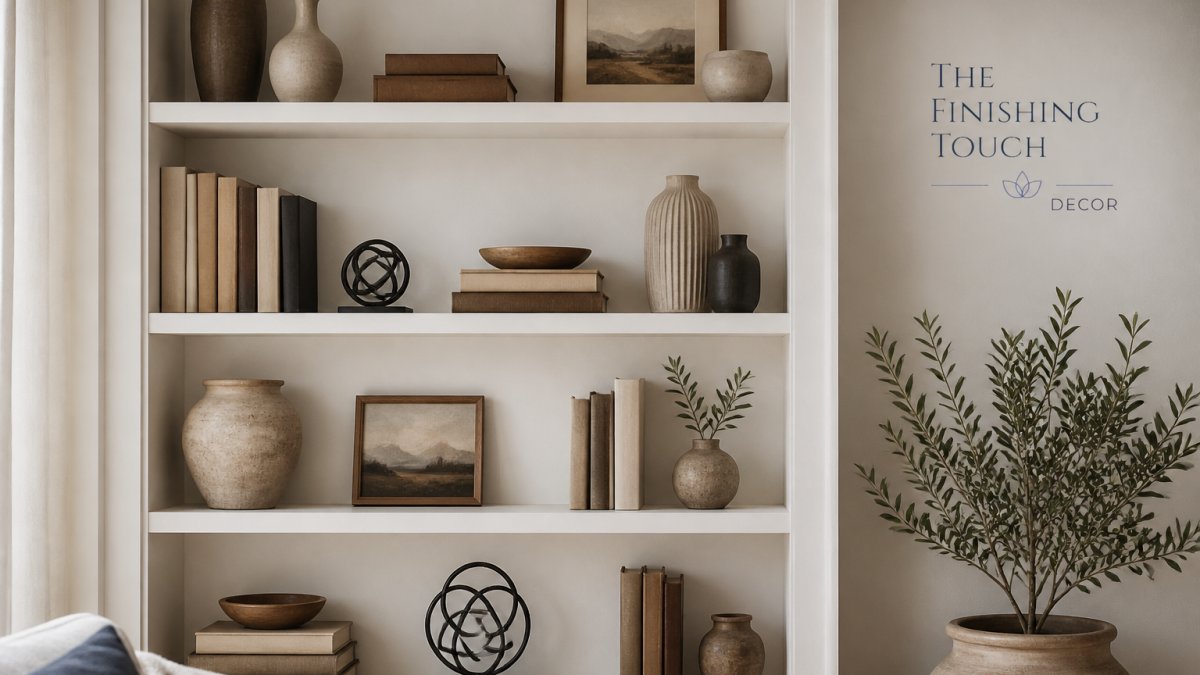
Another essential rule is the rule of threes. Group objects in odd numbers, three vases, three frames, or three small sculptures. Odd-numbered groupings feel more natural and intentional than even-numbered ones.
Bookshelf Decorating Ideas: Mixing Objects and Negative Space
This is where you style bookshelves as an art. You're not just organizing books anymore, you're creating a display.
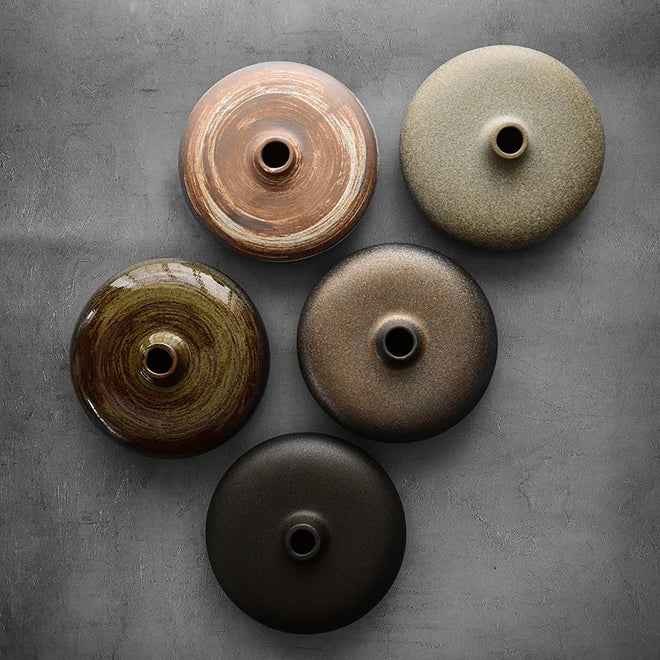
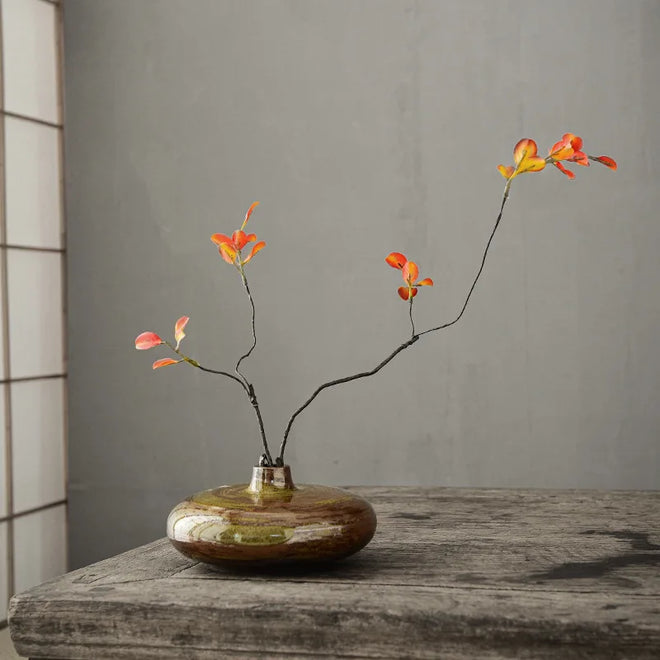
Start by identifying your statement pieces. Explore decorative vases that work as focal points to anchor your display.
Layering and Statement Pieces
Layering means placing objects at different depths. Don't line everything up at the front edge of the shelf. Pull some books forward. Push others back. Lean a framed photo against the back. Tilt a book at an angle.
Statement pieces work best when they're slightly elevated or positioned at eye level. If your bookshelf is in a living room, the middle shelf is usually eye level. Place your most striking object there.
The Neutral Simple Two-Toned Ceramic Classic Grey Vase from The Finishing Touch Decor works beautifully as a statement piece.
Natural Gypsum Mine White Onyx Bookend →
Using Scale and Proportion
Scale matters more than people realize. A tiny object surrounded by large books disappears. A massive object on a small shelf looks cramped.
Proportion is about relationships. If you have a tall book, pair it with a medium-height object and a small accessory. This creates visual rhythm.
A good rule: let your largest object take up about one-third of the shelf width. The remaining two-thirds hold books and smaller objects. This ratio feels balanced without being rigid.
The Natural Gypsum Mine White Onyx Bookend serves dual purposes, it's functional and decorative.
Bookshelf Styling Ideas for Living Room Displays
Living room bookshelves are often on display. Guests see them. You look at them every day. This means styling matters.
In a living room, your bookshelf can reflect your personality and interests. Mix books with objects that tell your story.
Lighting changes everything. If your living room has natural light from a window, position your bookshelf to catch it. Light highlights colors and creates shadows that add depth.
The Metal Nordic Knot Minimalist Iron Art Table Sculpture brings contemporary style to any living room bookshelf.
Balance Books with Decorative Objects
The ratio matters. Too many books and your shelf looks like a library. Too many decorative objects and it looks cluttered.
A good starting point: 60% books, 40% decorative objects. This keeps the focus on your collection while letting personality shine through.
Distribute objects throughout all shelves, not just the top one.
Negative space is your friend. It's the empty space around and between objects. Negative space makes things feel intentional and prevents visual overwhelm. Don't fill every inch.
Learn more about complementary styling techniques in Express Your Creativity And Style With Mix Match Wall Art, which covers how wall art and shelf displays work together to define a room's aesthetic.
Style Bookshelves for Different Needs and Budgets
Not every bookshelf serves the same purpose. A student's shelf has different needs than a designer's. A rental apartment requires different solutions than a permanent home. The most useful styling advice accounts for who uses the shelf, what it holds, and what constraints the space imposes.
Practical Measurements and Weight Limits
Before you style, know what your shelf can handle. Standard bookcase shelves are typically 10 to 12 inches deep and 11 to 13 inches apart vertically.
Shelf depth matters for layering. On a 10-inch-deep shelf, you have room for a standard hardcover (about 6 to 9 inches tall and 1 to 2 inches thick) plus a small object in front. On a 12-inch shelf, you can layer a framed photo behind a stack of books.
Styling for Different Bookcase Types and Room Layouts
Built-ins behave differently from freestanding cases. Built-ins are fixed, so you style them in place and can use the full height. Freestanding bookcases often have adjustable shelves, which lets you create taller openings for art books and shorter ones for paperbacks.
Placement affects the room. A bookcase against a wall reads as a backdrop; a bookcase used as a room divider needs styling on both sides and should stay below eye level so it doesn't block sightlines.
Book Organization Alongside Aesthetics
A beautiful shelf you can't use is a failed shelf. Decide how you'll find books before you arrange them. Alphabetical by author works for heavy readers; genre grouping works for mixed collections; color-based systems look striking but make specific titles hard to locate. A practical compromise is to color-block the books you rarely reread and keep frequently used reference books in a consistent, easy-to-reach spot. Many professional stylists use a hybrid: color families on open shelves, with a hidden basket or lower cabinet for the books that don't earn display space.
Budget-Friendly and Renter-Friendly Solutions
You don't need new accessories to restyle a shelf. Start with what you own: books, bowls, candlesticks, framed photos, and small plants. Rotate objects from other rooms before buying anything. For renters, freestanding bookcases and removable adhesive hooks for lightweight art avoid drilling. Command-style strips are widely available at hardware and home stores and hold small frames without wall damage. If you want a refresh, one well-chosen piece, such as a ceramic vase or a sculptural bookend, can change the look of an entire shelf for less than a dinner out.
Styling for Specific Households
Households with young children need low shelves that hold durable board books and soft objects, with breakables kept above arm's reach (generally above 48 inches for toddlers). Pet owners should avoid low shelves with tassels, dried flowers, or small items that invite batting; closed baskets on bottom shelves solve both problems. For accessible styling, keep frequently used items between 15 and 48 inches from the floor, the typical comfortable reach range for adults. In busy homes, choose washable finishes and avoid open shelving in high-traffic paths where objects get knocked.
Lighting and Maintenance
Lighting changes how a shelf reads. A small LED picture light or a clip-on shelf light adds depth and highlights objects without wiring. Avoid direct sunlight on book spines, which fades covers over time; if a shelf sits in a bright window, rotate books periodically or use a UV-filtering film. Dust shelves monthly with a microfiber cloth, and lift objects rather than sliding them to avoid scratches.
| Need | Practical Approach | Investment Approach |
|---|---|---|
| Renters | Freestanding bookcases, removable adhesive hooks, portable decor | Lightweight, moveable pieces |
| Small spaces | Vertical stacking, minimal objects, tall narrow cases | Tall, narrow statement pieces |
| Design-forward | Mix affordable basics with one statement piece | Premium materials, curated objects |
| Family homes | Durable objects, closed baskets on low shelves, breakables above 48 inches | Quality pieces that last years |
| Heavy readers | Hybrid organization: color on display, reference books accessible | Custom shelving with adjustable heights |
Discover Master Your Space Budget Friendly Decor That Makes A Statement for more strategies on styling shelves affordably without sacrificing style.
Frequently Asked Questions
What is the basic rule for styling bookshelves?
The fundamental bookshelf styling rule is balance: combine books with decorative objects, vary heights and shapes, use negative space, and arrange items in odd-numbered groupings (groups of 3 or 5). Start by choosing a color palette, then layer larger statement pieces as anchors with smaller accessories filling gaps. This creates visual rhythm and prevents shelves from looking cluttered or chaotic.
How do you arrange books on a bookshelf to make it look balanced?
Arrange books using a mix of vertical and horizontal orientations. Stack some books upright, lay others flat, and vary their heights across shelves. Group books by color or size in sections rather than spreading them randomly. Use bookends or sculptural pieces to anchor sections and create visual breaks. Alternate heavy visual weight with lighter areas of negative space to maintain equilibrium across the entire shelf.
What decorative objects work best on bookshelves?
The best bookshelf decorative objects include vases, small sculptures, framed artwork, ceramics, and meaningful personal items. Choose pieces in varying heights and scales, mix tall sculptural pieces with small accessories. Natural stone bookends or iron sculptures add sophistication and anchor book groupings. Avoid overcrowding; leave negative space between items so each piece stands out and the shelf feels curated rather than cluttered.
Can you style bookshelves on a budget without them looking cheap?
Yes. Focus on quality over quantity by selecting a few statement pieces like ceramic vases or sculptural bookends, then fill remaining space thoughtfully with books you already own. Arrange items with intention using the styling principles of balance, color coordination, and negative space. Even budget-friendly accessories look elevated when properly placed and given room to breathe. The Finishing Touch Decor offers affordable vases starting at $13.99 and decorative sculptures that create professional-looking displays without breaking your budget.