

Table of Contents
- Assess Your Space and Create a Floor Plan
- Small Studio Apartment Storage Ideas That Work
- How to Divide a Studio Apartment Into Zones
- Budget-Friendly Studio Apartment Furniture Choices
- Small Apartment Decluttering Tips for Long-Term Success
- Styling Your Organized Studio on a Budget
- Frequently Asked Questions
Last Updated: October 11, 2026
Assess Your Space and Create a Floor Plan
Learning how to organize a studio apartment on a budget starts with measuring your space and sketching a floor plan. Note windows, doors, outlets, and vents to prevent costly furniture mistakes.
Measure and Document Your Studio
Measure length, width, and ceiling height. Record doorway and closet dimensions, plus wall space above windows for shelves or storage.
Mark outlet and switch locations to place desks and lighting safely. Note architectural quirks like sloped ceilings or radiators that affect furniture placement.
Photograph each wall and the floor plan from above. These images help you visualize scale when shopping for furniture.
Create a Rough Floor Plan
Sketch your studio on graph paper or use a free tool like Floorplanner. Draw walls to scale and mark windows, doors, outlets, and fixtures to prevent buying furniture that won't fit.
Identify your main circulation path from entry to bed, kitchen, and bathroom. Keep this route clear so your studio feels larger and safer.
Identify Your Zones and Awkward Spaces
Your floor plan helps divide your studio into functional zones: sleeping, living, working, and dining. Position each based on light, outlets, and traffic flow.
Look for overlooked spaces: behind doors, beside closets, under sloped ceilings, or above doorways. These spots accommodate narrow shelving, hooks, or storage containers that reclaim 10-20 square feet.
Determine Your Furniture Footprint
Measure your furniture dimensions and write them on your floor plan. Test different arrangements before buying anything.
Leave 18 inches of clearance in front of drawers and closets, and 24-30 inches between major furniture pieces for safe movement.
Test your layout mentally or with cardboard cutouts before buying anything. This step often reveals that a piece you love won't work, saving you money and frustration.
Small Studio Apartment Storage Ideas That Work
Storage makes or breaks small-space living. The good news is that budget-friendly options exist everywhere. You don't need expensive built-ins to maximize every inch.
Vertical Storage and Wall-Mounted Solutions
Vertical storage transforms unused wall space into functional storage. Wall-mounted shelves cost far less than furniture and create visual interest.
Install floating shelves above your desk, beside your bed, or in kitchen areas. Vary shelf heights to create visual rhythm and accommodate different item sizes.
Wall hooks behind doors and along walls hang bags, scarves, and lightweight baskets, freeing closet space for items that need it more.
Under-Bed and Hidden Storage Options
Use low-profile storage bins under your bed for seasonal clothing and rarely-used items. Measure clearance carefully so containers slide smoothly.
Storage ottomans serve double duty as seating and hidden storage. The Modern Industrial PU Leather & Steel Swivel Ottoman offers 360-degree swivel functionality with sturdy steel construction. At just 16 inches in all dimensions, it fits snugly in corners while supporting up to 250 pounds. Use it to store blankets, pillows, or office supplies beneath the cushioned top.

Bed risers elevate your mattress and double your under-bed storage capacity.
How to Divide a Studio Apartment Into Zones
Creating distinct zones transforms a studio into a multi-functional home. Psychological separation matters more than physical walls.
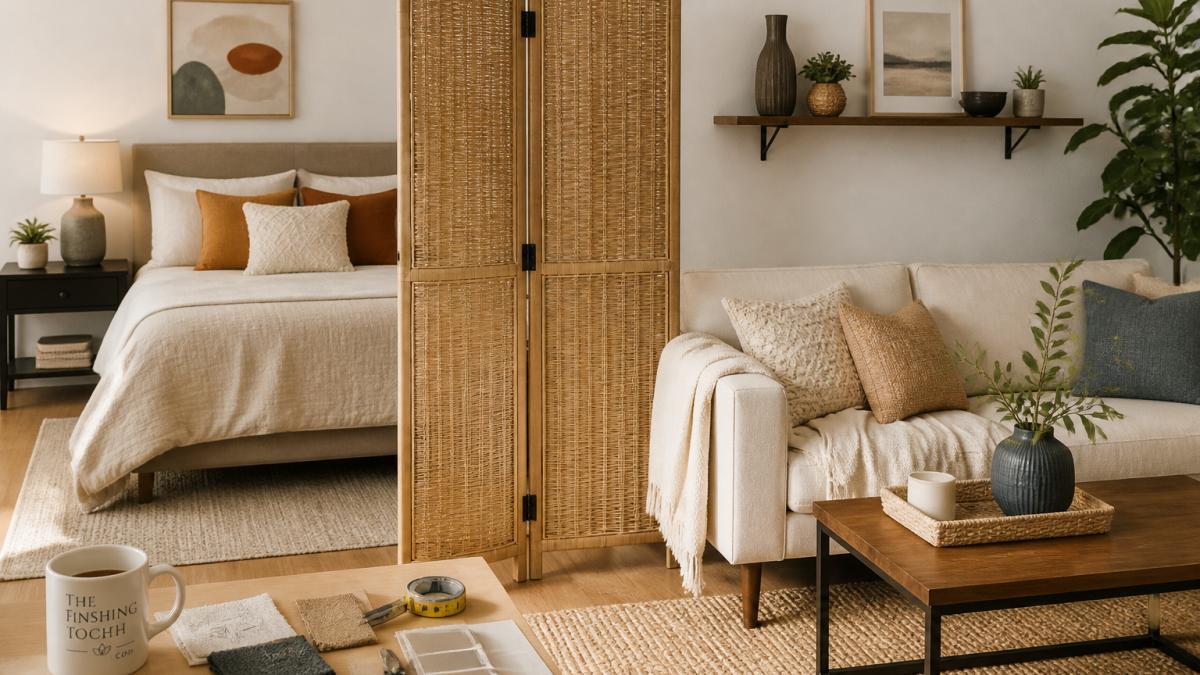
Position your bed and sofa on opposite walls to create natural boundaries between sleeping and living areas. Add a bookshelf or console table as a subtle divider.
Folding screens and fabric panels create instant privacy without damaging rental walls.
Rugs anchor zones visually and acoustically. Use one under your bed and another in your living space to define areas and muffle sound.
Warm lights near your bed and task lighting over your desk reinforce zone separation and transform how your studio feels throughout the day.
Budget-Friendly Studio Apartment Furniture Choices
Furniture selection determines whether your studio feels cramped or spacious. Choosing the right pieces, and the right price point, is essential for how to organize a studio apartment on a budget.
Budget Tiers: What to Spend Where
Prioritize pieces you use daily and will keep long-term. Save money on temporary or decorative items.
Essential furniture (invest more here):
- Bed frame and mattress: Quality matters; a good mattress lasts 7-10 years. Choose a basic frame with storage underneath.
- Sofa or seating: Look for durable upholstery and compact footprint (72 inches or less).
- Desk (if you work from home): An ergonomic workspace prevents back pain and improves productivity.
Secondary furniture (moderate spend):
- Shelving units: Open shelves display and store simultaneously. Freestanding units work for renters.
- Storage ottomans or benches: Serve as seating, storage, and visual anchors for zones.
- Dining table or console: A small table (30-36 inches) accommodates meals and work without consuming floor space.
Accent pieces (save money here):
- Side tables: A small round or rectangular table beside your sofa or bed adds function.
- Shelving accessories and organizers: Baskets, bins, and dividers maximize existing storage.
- Mirrors and wall art: These enhance style without taking up floor space.
Multifunctional Furniture: Earning Its Square Footage
In a studio, every piece must justify its space. Multifunctional furniture is essential.
Storage ottomans and benches: Serve as seating, footrest, coffee table, and hidden storage.
Desk-dining hybrids: A narrow desk (36-48 inches wide) serves as both workspace and dining table. Choose one with shelves underneath for additional storage.
Modern Industrial PU Leather & Steel Swivel Ottoman →
Bed frames with drawers ($200-500): Platform beds with built-in storage drawers eliminate the need for a separate dresser. Each drawer holds 10-15 cubic feet of clothing or linens.
Sofa beds or sleeper sofas ($400-900): If you entertain guests occasionally, a sofa bed replaces a sofa and guest bed. Quality matters here, cheap sleeper sofas are uncomfortable for both sitting and sleeping.
Wall-mounted desks and tables ($60-180): These fold down when in use and fold up against the wall when not needed. They're ideal for small studios where floor space is precious.
Rental-Safe Furniture and Storage Solutions
If you rent, avoid permanent changes. Landlords charge for wall damage, and you'll lose your security deposit or face fees. Renter-friendly options are often cheaper than built-in alternatives.
Freestanding shelving units ($50-200): Metal or wood shelves on legs require no wall anchors or drilling. They're portable, affordable, and work in any rental.
Tension rods and removable hooks ($10-40): Install hooks using adhesive strips rated for 5-10 pounds.
Over-the-door organizers and hooks ($15-50): These hang on existing doors and require no installation. Use them for shoes, accessories, cleaning supplies, or pantry items. They're temporary, affordable, and highly effective.
Peel-and-stick wallpaper and wall decals ($20-60): Add visual interest without permanent damage. Peel-and-stick options come off cleanly and don't require primer or paint.
Furniture pads and sliders ($10-25): Protect your rental's floors while allowing you to move furniture easily for cleaning or rearranging. This small investment prevents damage charges.
Scale and Proportion in Small Spaces
Oversized furniture overwhelms a studio and makes it feel smaller. Choose pieces proportional to your room.
Compact sofas (60-72 inches): A full-size sofa (84+ inches) consumes too much floor space. Look for apartment-scale sofas designed for smaller rooms.
Narrow shelving (12-18 inches deep): Deep shelves project into the room and waste space. Shallow shelves hold books, plants, and décor without creating a visual barrier.
Slender side tables (18-24 inches wide): A small round or rectangular table beside your sofa or bed adds function without bulk. Round tables feel less obstructive than rectangular ones in tight corners.
Furniture with exposed legs: Pieces that sit on legs (rather than solid bases) create sight lines underneath. This visual trick makes rooms feel larger and airier.
Light-colored and reflective finishes: Pale wood, white, or glass surfaces reflect light and feel less heavy than dark wood or metal.
Where to Buy Budget-Friendly Furniture
New furniture from big-box retailers costs $200-800 per piece. Consider alternatives:
- Secondhand marketplaces: Facebook Marketplace, Craigslist, and Nextdoor often have gently used furniture for 40-60% less than retail. Inspect items in person and test drawers and hinges.
- Discount retailers: Budget chains offer basic pieces at lower price points, though durability may be shorter.
- Online flash sales and seasonal discounts: Sign up for email alerts from furniture retailers. End-of-season sales (August and January) offer 20-40% discounts.
- Local thrift stores and estate sales: Solid wood pieces from estate sales often cost $50-150 and last decades. Avoid upholstered items unless you can inspect them thoroughly.
Small Apartment Decluttering Tips for Long-Term Success
Organizing means nothing if clutter returns within months. Sustainable organization requires systems that prevent accumulation.
Start with ruthless honesty. Keep items you use regularly or genuinely love. Everything else creates visual noise and decision fatigue. This single step often frees 30-40% of your space.
Implement the one-in-one-out rule. When you bring something new home, remove something of similar size or category. This prevents gradual accumulation that derails your organization.
Create designated homes for everything. Your keys go in the same spot. Your mail has a specific drawer. Socks live in one container. These habits prevent items from scattering across your studio apartment.
Use clear containers so you see what's inside. Opaque bins hide items and encourage duplicate purchases. Clear storage lets you find things and prevents forgotten items from taking up space.
Styling Your Organized Studio on a Budget
Organization alone feels clinical. Add style to make your space feel like home.
Throw pillows and blankets add warmth without permanent changes. The Round Large Pillow Floor Seating Meditation Pillow with Insert brings Bohemian charm to any corner.

Wall art costs little but transforms bare walls. Hang prints, tapestries, or photographs at eye level. This draws the eye upward and makes ceilings feel higher.
Plants add life. Small plants on shelves or desks cost $5-15. They soften hard edges and bring nature indoors.
Color creates mood. Warm neutrals feel cozy. Cool tones feel spacious. Choose a consistent palette across your studio apartment to create cohesion.
Mirrors reflect light and create the illusion of space. Position a mirror opposite a window to bounce natural light throughout your studio apartment.
Frequently Asked Questions
What's the cheapest way to organize a studio apartment?
Start with free or low-cost solutions: declutter ruthlessly, use vertical wall space with affordable shelving, store items under the bed in budget bins, and repurpose furniture for multiple functions. Multifunctional pieces like ottomans with storage cost less than buying separate furniture. Focus on organization before buying new items, most studio dwellers already own enough to fill the space efficiently.
How do I maximize storage in a small studio apartment?
Use every inch of vertical space with wall-mounted shelves, hooks, and pegboards. Invest in stackable storage bins for under-bed organization, utilize closet space with organizers, and choose furniture with hidden storage like ottomans or benches. Open shelving displays items while storing them, and nooks often go unused, add narrow shelves or storage baskets there. Vertical storage solutions prevent clutter from spreading across limited floor space.
How can I divide my studio apartment without permanent changes?
Use renter-safe dividers like freestanding room dividers, tall bookshelves, or curtain rods with fabric panels to create separate zones. Arrange furniture strategically to define sleeping and living areas without walls. Area rugs, lighting, and different paint colors on accent walls (if allowed) also signal distinct spaces. These methods work for renters and require no drilling or permanent installation.
What furniture works best for a small studio apartment?
Choose multifunctional pieces: ottomans that serve as seating and storage, murphy beds or sofa beds, nesting tables, and wall-mounted desks. Look for furniture with vertical lines to make ceilings feel higher. Pieces like The Finishing Touch Decor's Modern Industrial Ottoman ($121.20) combine style with function in compact footprints. Avoid oversized sectionals or bulky pieces that consume floor space without adding storage value.
Organizing a studio apartment on a budget requires strategy, not spending. By combining vertical storage, multifunctional furniture, and intentional zone division, you create a space that feels larger and more functional. The Finishing Touch Decor helps you finish these organized spaces with stylish, affordable accents that express your personality. View our collection of throw pillows, storage ottomans, and décor pieces designed for small spaces and budget-conscious living.