

Table of Contents
- What You'll Need Before You Start
- Step 1: Declutter and Define Your Calm Foundation
- Step 2: Build a Muted Palette With Neutral Colors and Earth Tones
- Step 3: Choose Affordable Natural Materials and Wood Finishes
- Step 4: Budget Japandi Living Room Ideas That Look Expensive
- Step 5: Japandi Style for Small Apartments and Tight Floor Plans
- Step 6: Renter-Friendly Japandi Decor You Can Take With You
- Step 7: Japandi DIY Decor Ideas and Secondhand Sourcing
- Frequently Asked Questions
Last Updated: October 21, 2026
What You'll Need Before You Start
Japandi style is a design approach that blends Japanese simplicity with Scandinavian warmth, using clean lines, natural materials, and a calm, muted palette. Learning how to achieve Japandi style on a budget comes down to smart sourcing, not spending.

Here's the good news: the pieces that define this style are often the cheapest ones to find. You just need a plan before you shop.
Total Time: 2-4 weeks, done in stages Difficulty: Beginner-friendly Budget: Flexible, built around secondhand and accent pieces
Before you buy anything, gather these basics:
- A measuring tape and a notebook (or phone notes app)
- A donation box for decluttering
- A mood board with 5-8 reference photos
- Paint swatches in warm whites, greige, and soft beige
- A list of local thrift shops and secondhand marketplaces
Step 1: Declutter and Define Your Calm Foundation
Decluttering is the first step because Japandi style depends on open space, not objects. You cannot style your way around visual clutter.
Start with one room. Remove everything from shelves and surfaces, then put back only what you use or genuinely love. A common mistake is keeping "someday" items that quietly fill the room back up within a month.
The wabi-sabi philosophy of finding beauty in imperfection sits at the heart of this style. It rewards restraint over abundance. Fewer, better things.
Work through each room in this order:
- Clear all surfaces completely
- Sort into keep, donate, and toss piles
- Return only functional and meaningful items
- Leave at least one surface almost empty per room
That empty space is not wasted. It is the design.
Step 2: Build a Muted Palette With Neutral Colors and Earth Tones
Neutral colors do the heavy lifting in Japandi rooms. The palette stays tight: warm white, cream, greige, soft beige, sage, and charcoal for contrast.
Pick three base colors and one accent, then stop. A muted palette works because it repeats. When every piece echoes the same tones, a room feels intentional even when the furniture is mismatched.
Earth tones add the warmth that keeps this look from feeling cold. Think clay, sand, mushroom, and muted olive.
Try this simple rule:
| Layer | Color Role | Example |
|---|---|---|
| Walls | Base | Warm white or greige |
| Large furniture | Secondary | Light wood, cream, charcoal |
| Textiles | Texture + tone | Oatmeal, sage, clay |
| Accents | Contrast | Black metal, dark ceramic |
Step 3: Choose Affordable Natural Materials and Wood Finishes
Natural materials carry this style more than any single piece of furniture. Wood, linen, ceramic, rattan, and stone all read as calm and grounded.
Wood finishes matter here. Light wood like oak and ash leans Scandinavian. Darker walnut and smoked oak lean Japanese. Mixing one light and one dark finish in the same room is standard practice, not a mistake.
For budget-friendly options:
- Choose veneer or laminate over solid wood where it won't be touched daily
- Look for rubberwood and pine, which cost less than oak
- Prioritize real wood on the piece you touch most, like a side table
- Skip high-gloss finishes entirely
Our Scandinavian solid rubber wood small side table is a good example of the balance: clean round lines, a light finish, and no assembly. It anchors a seating area without demanding attention.

Step 4: Budget Japandi Living Room Ideas That Look Expensive
A Japandi living room can look expensive on a modest budget because the style hides cost well. Texture and negative space do the work that pricey furniture usually does.
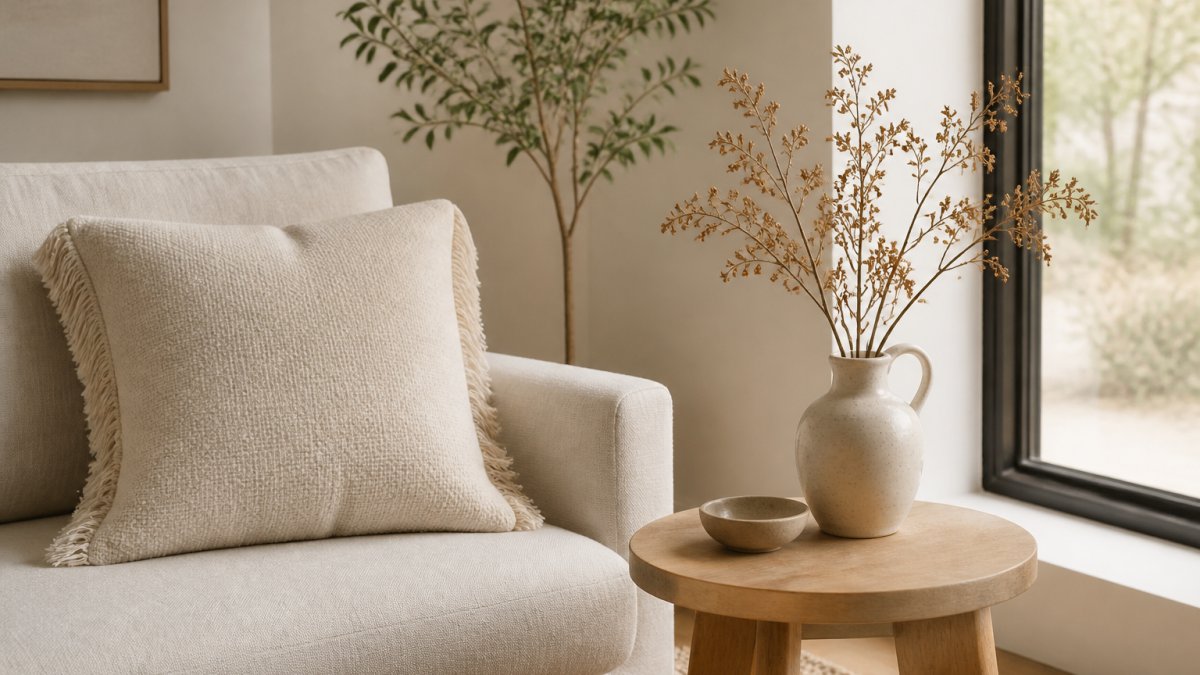
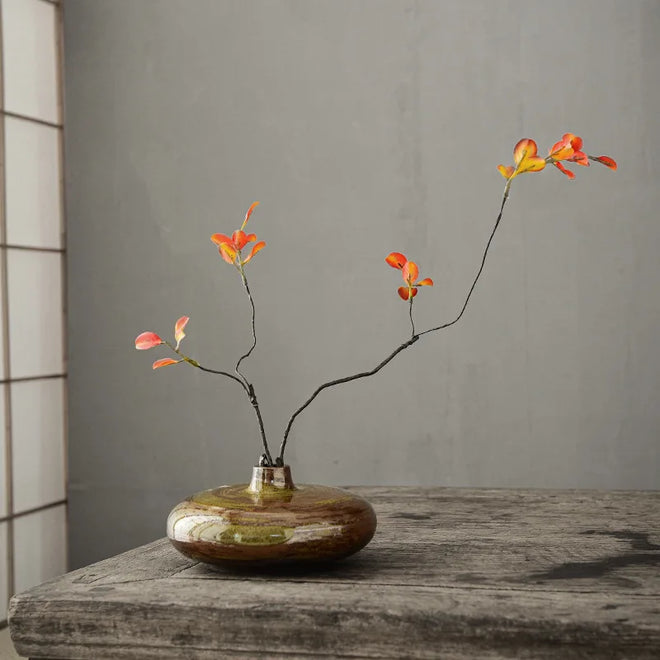
Start with what you already own. Slipcover a worn sofa in an oatmeal tone. Swap shiny hardware for matte black. Add one textured throw pillow and one ceramic vase, and the room shifts.
Layer lighting at three heights: overhead, table, and floor. Soft lighting changes a room's mood more than new furniture does.
Step 5: Japandi Style for Small Apartments and Tight Floor Plans
Small apartments suit this style better than large rooms, because the look depends on breathing room rather than square footage. The trick is choosing fewer, lower, lighter pieces and solving the two problems renters actually face: floors you cannot change and storage you cannot build in.
Modern Nordic Wood Japandi Style Table Lamp →
Low-profile furniture keeps sightlines open. A low sofa, a low side table, and wall-mounted shelves all make a small room feel taller. Aim for furniture with visible legs and open bases so floor space reads through the piece.
Renter-specific moves that cost little:
- Float furniture away from walls where space allows
- Use one large rug instead of several small ones
- Choose vertical storage over bulky cabinets
- Keep window areas clear for natural light
- Replace closet doors with curtains on a tension rod to soften a wall
Flooring you can reverse. Most leases forbid permanent flooring changes, so use washable, low-pile rugs in jute, cotton, or flat-weave wool in oatmeal or greige. A large area rug over wall-to-wall carpet instantly changes the room's tone without adhesive. For hard floors, check your lease first and keep the original flooring underneath undamaged.
Storage that does not look like storage. Japandi rooms hide clutter rather than display it. Use lidded baskets in seagrass or felt, a low media console with closed doors, and under-bed bins in neutral canvas. A single tall, narrow bookcase in light wood holds more than a wide low one and preserves floor space.
Reversible wall and window fixes. Removable adhesive hooks and strips hold art and small shelves without holes. Tension rods handle curtains and closet openings. Plug-in sconces and floor lamps avoid hardwiring. Leaning mirrors and freestanding shelves add function without anchors.
Multifunctional pieces earn their place. A side table that doubles as a stool or display surface saves floor space. A storage ottoman in linen serves as seating, a footrest, and a blanket bin. Our Modern Nordic wood Japandi style table lamp adds warm light without taking up a corner, which matters when every surface is contested.
Step 6: Renter-Friendly Japandi Decor You Can Take With You
Renter-friendly decor means pieces that move with you and leave no holes behind. That rules out built-ins and favors textiles, lighting, and freestanding accents.
The core renter kit:
- Removable adhesive hooks for wall art
- Freestanding shelves and leaning mirrors
- Tension rods for curtains
- Washable throw pillow covers
- Portable lamps and plug-in sconces
Textiles are the highest-impact, lowest-risk buy. Our cream and greige wabi-sabi fringed throw pillow covers swap a sofa's look in seconds and pack flat when you move. Covers only, so you keep your existing inserts.
Step 7: Japandi DIY Decor Ideas and Secondhand Sourcing
Secondhand sourcing is where this style gets genuinely affordable. Well-made wood furniture from decades past often costs less than new particleboard, and it fits the aesthetic better.
Where to look. Thrift shops, estate sales, Facebook Marketplace, Craigslist, OfferUp, and local auction houses all carry Japandi-friendly pieces. Estate sales tend to have the best mid-century and Scandinavian wood furniture; marketplace listings move fastest on Sunday evenings and the first of the month when people are moving.
What to look for at thrift shops and secondhand marketplaces:
- Solid wood frames with dovetail joints
- Unpainted wood that can be sanded and oiled
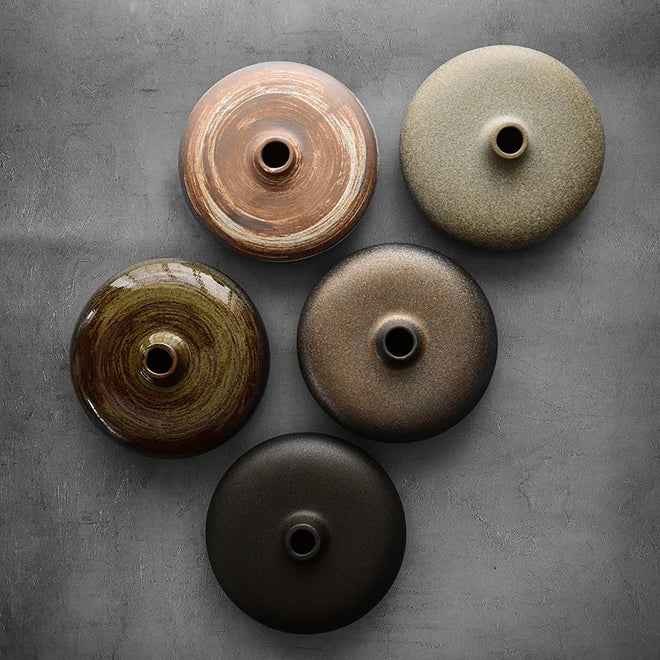
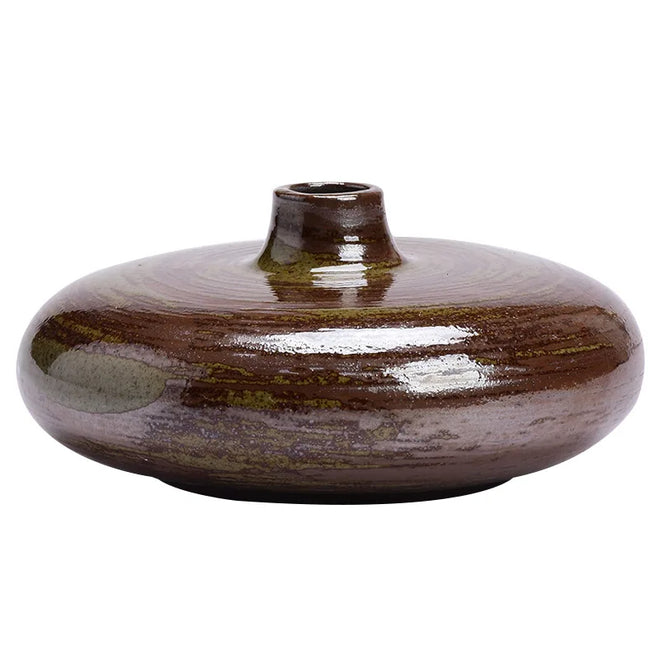
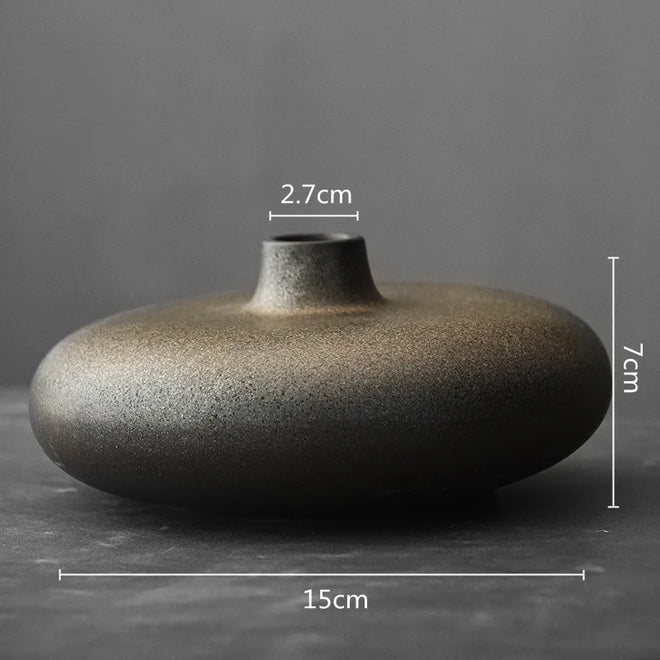
- Simple ceramic pots and jugs
- Linen and cotton textiles in neutral tones
- Low, clean-lined side tables and stools
The inspection checklist before you pay:
- Any wobble in the legs or joints, push gently on opposite corners
- Water rings and deep scratches, surface marks sand out, dark stains often do not
- Strong odors that will not air out, smell drawers and upholstery directly
- Missing hardware that is hard to replace, check drawer glides and hinges
- Whether the finish can be sanded back, veneer can be sanded lightly, not aggressively
- Pest signs, look for frass, tiny holes, and musty smells under cushions
- Whether it fits your door and stairwell, measure before you commit
Cleaning and refinishing without ruining the piece. For wood, start with a mild dish soap and water wipe, then assess. A light sanding with 220-grit followed by a coat of food-safe oil or hardwax oil restores most dull finishes. Do not sand veneer down to the core; scuff it lightly and apply a compatible finish. For painted pieces, a deglosser and a coat of matte water-based paint in warm white or charcoal updates the look without a full strip.
Easy DIY updates that cost very little:
- Sand and oil a secondhand wood table
- Repaint a frame in warm white or matte black
- Wrap cheap pots in linen or jute
- Swap lamp shades for fabric ones in cream
- Group three mismatched ceramics on one tray
What to skip. Upholstered pieces with strong odors, visible pest activity, or heavy pet staining are usually not worth professional cleaning. A cheap chair that needs $150 in cleaning costs more than a new one. Pressed-wood furniture with peeling veneer is rarely worth refinishing; the repair often fails within a year.
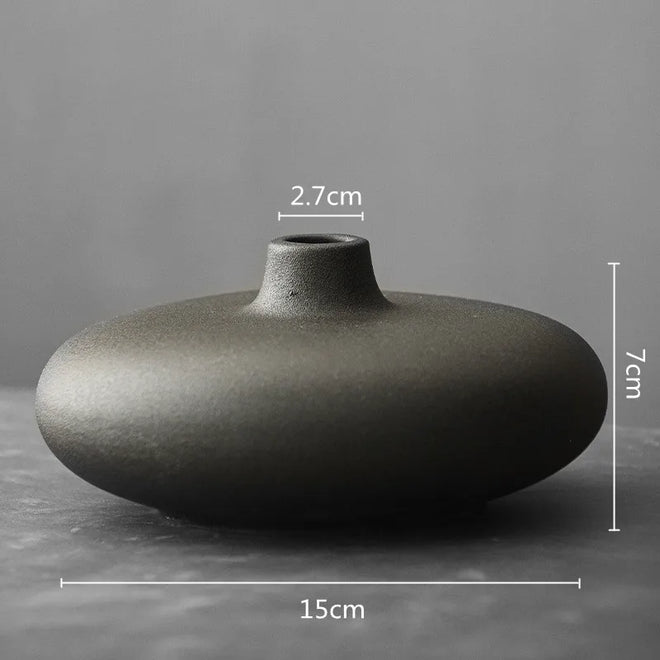
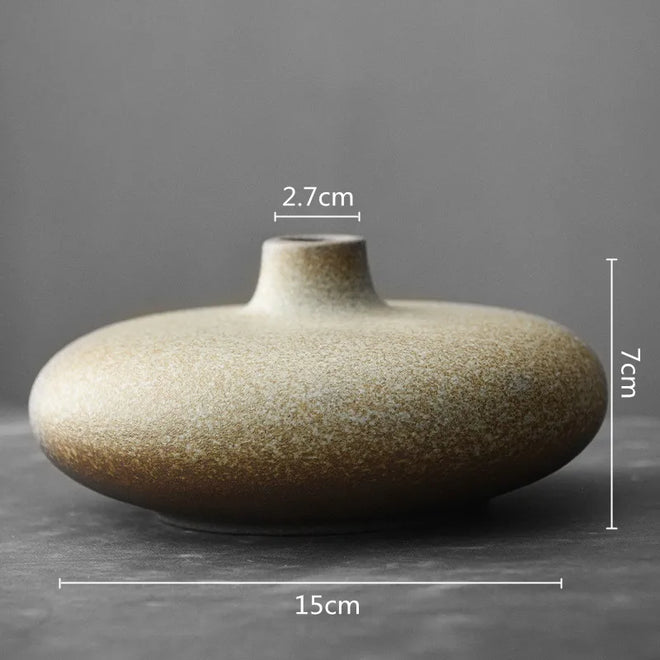
A simple ceramic accent finishes the look. Our white set of three clay speckled handled jug vases works on a shelf, a dining table, or a windowsill, and the handmade speckle reads as collected rather than bought.

Frequently Asked Questions
What are the 7 rules of Japandi home style?
The core rules are: keep only what you use (minimalism), stick to a muted palette of neutral colors and earth tones, favor natural materials like light wood and linen, choose simple forms and clean lines, mix functional design with wabi-sabi imperfection, add soft lighting, and buy quality over quantity. You can follow all seven on a budget by shopping secondhand, using DIY decor, and adding texture through textiles and ceramics rather than expensive furniture.
How can I make my apartment look Japandi without replacing the furniture?
Start with what you own. Clear visual clutter, swap bright throw pillow covers for cream or greige wabi-sabi styles, add a light wood side table or lamp, and layer in linen, ceramics, and a plant. Renter-friendly Japandi decor like tension rods and freestanding shelves lets you change the look without permanent changes. Soft lighting from a fabric-shade lamp also warms a room instantly.
Where can I buy cheap Japandi furniture?
Thrift shops, estate sales, Facebook Marketplace, and IKEA-style stores are the best sources for affordable furniture. Look for solid wood pieces with clean lines and light or dark wood finishes. Check joints, drawers, and legs before buying secondhand, and avoid particleboard that has swollen from moisture. A small solid rubber wood side table or a simple wooden lamp can anchor a Japandi look without a big spend.
Are wabi-sabi and Japandi the same?
No. Wabi-sabi is a Japanese worldview that finds beauty in imperfection and age, while Japandi is a design style that blends Japanese and Scandinavian design. Japandi borrows wabi-sabi's appreciation for handmade texture and natural materials but adds Scandinavian functional design, clean lines, and hygge coziness. In practice, a Japandi room might include a speckled clay vase or a fringed pillow cover as a wabi-sabi touch.