

Table of Contents
- Start With a Warm, Earthy Base
- Modern Boho Living Room Ideas That Feel Current
- Layer Rugs, Throws, and Pillows for a Boho Chic Look
- Add Statement Lighting and Wicker Accents
- Boho Decor Essentials for Beginners: Wall Art and Plants
- Style a Boho Chic Living Room in a Small Apartment
- Budget-Friendly DIY Hacks and Sustainable Sourcing
- Caring for Natural Boho Materials So They Last
- Frequently Asked Questions
Last Updated: September 16, 2026
Start With a Warm, Earthy Base
The biggest mistake in boho chic styling is starting with furniture and hoping the room feels warm later. Warmth comes from the base layer: wall color, floor tone, and one anchoring textile. Get that right and everything on top cooperates.
Choose a Color Palette That Anchors the Room
An earthy color palette separates a boho chic living room from one that just looks messy. Warm neutrals, clay, terracotta, olive, and soft ochre hold pattern mixing without turning chaotic.
Modern Boho Living Room Ideas That Feel Current
Modern boho living room ideas work when you subtract rather than add. The style keeps natural materials but tightens the palette and leans on cleaner silhouettes.
Layer Rugs, Throws, and Pillows for a Boho Chic Look
Layering makes a boho chic living room feel collected instead of purchased all at once. Start with a large natural-fiber rug, then add a smaller patterned rug on top at an angle.
How to Layer Textures in Interior Design Without Clutter
Learning how to layer textures in interior design comes down to contrast, not quantity. Three textures that read differently beat six that all feel the same.

A working formula:
- Smooth base: cotton or linen upholstery
- Rough layer: jute, rattan, or raw wood
- Soft accent: a woven throw or tasseled pillow
Add Statement Lighting and Wicker Accents
Statement lighting in a boho room should feel handmade, not showroom-perfect. Wicker, rattan, and woven pendants beat metal fixtures because they cast patterned shadows that soften a room after dark.
Boho Decor Essentials for Beginners: Wall Art and Plants
Boho decor essentials for beginners come down to two things: something on the wall and something alive. Bare walls make even a well-furnished room feel unfinished, and plants add the organic shapes that define the aesthetic.
| Essential | What It Does | Where to Put It |
|---|---|---|
| Woven wall hanging | Fills bare wall, adds texture | Above sofa or bed |
| Jute or natural rug | Anchors the floor layer | Under main seating |
| Tasseled or textured pillows | Adds soft contrast | Sofa, floor cushions |
| Dried or potted plants | Organic shape, height | Corners, side tables |
| Woven pendant or lamp | Ambient light, shadow pattern | Overhead, near seating |
Style a Boho Chic Living Room in a Small Apartment
Small apartments are where most boho guides fail, because the style's instinct is to add. In a compact room, the goal flips: fewer, larger pieces, a clear floor, and texture and light doing the work square footage can't.
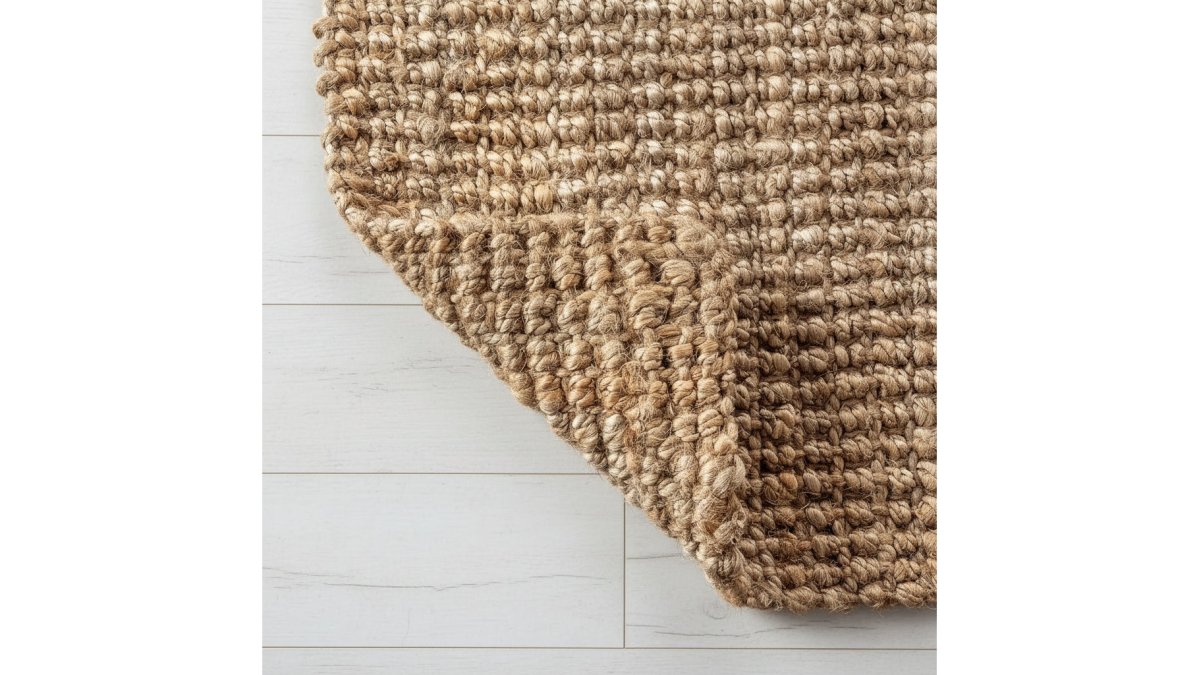
Hand-Woven Chunky Braided Natural Jute →
- Scale up, don't shrink down. One 8 x 10 ft rug reads calmer than two 5 x 7 ft rugs, because the eye registers a single floor plane instead of a patchwork. A low-profile sofa in a warm neutral takes less visual weight than a bulky sectional, even at the same seat count.
- Go vertical for storage. Woven baskets stacked on open shelving, a hanging macramé planter, and a wall-mounted tapestry replace floor clutter with wall texture. In rentals, tension rods and adhesive hooks handle most of this without drilling.
- Choose dual-purpose pieces. A floor pouf becomes a side table with a tray on top, an extra seat when guests arrive, and hidden storage if you pick one with a zip cover. A nesting side table set gives you one surface day-to-day and two when you entertain.
- Keep the sightline to the window clear. Boho styling loves layered textiles, but a rug, pouf, and floor lamp clustered in front of a window will make a small room feel smaller. Pull seating toward the center and leave the window wall open.
Budget-Friendly DIY Hacks and Sustainable Sourcing
Budget-friendly boho is about sourcing and sequencing, not spending less on worse items. Three habits that work:
- Shop vintage and secondhand first for baskets, vases, side tables, and frames. Wicker and wood improve with age, and vintage finds give a room the collected look new matching sets can't. Estate sales, Facebook Marketplace, and thrift stores are the highest-yield sources; check for wobble, water rings, and pest damage before buying.
- DIY the wall art. Macramé and yarn hangings are among the most beginner-friendly crafts. A basic macramé piece needs only cotton cord, a wooden dowel, and a few hours, a square knot and a lark's head knot cover most beginner patterns. A yarn tapestry is simpler still: wrap yarn around a dowel or branch, tie off, and trim. Both cost a fraction of a comparable retail piece.
- Buy natural materials once. Jute, cotton, and rattan outlast synthetic alternatives and fit the sustainable sourcing angle, since natural fibers biodegrade and are often produced at smaller scale.
DIY Hacks That Actually Hold Up
- Upcycle a thrifted basket into a planter by lining it with a plastic nursery pot, the liner catches water so the natural fiber doesn't mildew.
- Turn a vintage ladder into a throw blanket display. Lean it against a wall, drape two or three textiles over the rungs, and you have texture and storage in one piece.
- Make a no-sew pillow cover from a vintage tablecloth or linen remnant. Fold, pin, and stitch or use fabric tape along three sides, then slip over an existing insert.
- Repurpose glass jars and bottles as bud vases for dried stems. A cluster of three at different heights reads intentional rather than accidental.
Sustainable and Ethical Sourcing
- What is the fiber? Jute, cotton, rattan, wool, and linen are the boho staples. Blends that hide a synthetic core under a natural face are common, check the label, not the product photo.
- Who made it, and where? A named maker or region is a better signal than a generic "handmade" tag. Fair-trade and artisan-cooperative certifications exist but aren't universal, so a direct answer from the seller is often the most reliable signal.
- Is it built to last? Natural fibers that are tightly woven and finished hold up better than loose, untreated versions. A jute rug with a tight braid sheds less than a loose weave, and a rattan chair with reinforced joints lasts longer.
Budget boho isn't about spending the least, it's about spending once on pieces that age well and layering in handmade and secondhand finds that give the room a story. A room built this way looks collected because it is.

Caring for Natural Boho Materials So They Last
Natural materials need more attention than synthetic ones, but not much more. Jute sheds for the first few weeks, cotton fades in direct sun, and rattan dries out in low humidity, maintenance signals, not defects.
| Material | Common Issue | Fix |
|---|---|---|
| Jute | Shedding, dust buildup | Vacuum gently, rotate quarterly |
| Cotton | Fading, pilling | Keep out of direct sun, wash cold |
| Rattan / straw | Drying, cracking | Keep away from heat, wipe with damp cloth |
| Macramé / yarn | Dust, stretching | Shake out monthly, spot clean by hand |
Frequently Asked Questions
What are the key elements of a boho chic living room?
A boho chic living room combines natural materials, layered textiles, and an earthy color palette. Start with a jute or woven rug, add rattan or wicker furniture, then build texture with tasseled throw pillows, fringed blankets, and macrame wall hangings. Finish with potted plants, dried pampas grass in a floor vase, and low-profile seating like floor cushions or a straw pouf. The goal is a relaxed, collected look rather than a matching set.
How do you mix modern and boho styles in a living room?
Keep the bones of the room modern: clean-lined seating, neutral walls, and simple window treatments. Then layer in boho accents like a chunky braided jute rug, a crocheted cotton curtain with tassels, and a handmade wall tapestry. The contrast between crisp modern furniture and textural, global-inspired accessories is what makes modern boho living room ideas feel current instead of dated.
What color palettes work best for a boho chic aesthetic?
Warm neutrals form the base: cream, sand, terracotta, and soft clay. Build from there with earthy tones like rust, olive, and mustard, then add one or two jewel accents such as deep teal or burnt orange through throw pillows or wall art. Avoid cool grays and stark white, which flatten the cozy, layered feel that defines boho chic.
Is boho out of style in 2026?
No. Boho has shifted away from the heavy macrame-and-mandala look of earlier years toward a cleaner, more curated version. The style leans on natural materials, warm neutrals, organic shapes, and fewer but better pieces. Layering a jute rug with a cotton throw and a few handmade wall pieces still reads as current, especially when the rest of the room stays uncluttered.
How do you layer textures in interior design without making a room look cluttered?
Pick three textures maximum per zone and vary their scale. For example, pair a flat-woven jute rug with a chunky knit throw and smooth cotton pillow covers. Keep colors within one warm family so the eye reads cohesion, not chaos. Vary pile height and weave rather than adding more objects, and leave some empty space on walls and surfaces so each texture stands out.