

Table of Contents
- What French Country Decor Really Means for Beginners
- Key Elements Review: Color, Texture, and Pattern
- Affordable French Country Home Decor That Looks Curated
- French Country Furniture Essentials for Every Room
- The 3-5-7 Rule in Practice: Styling Without Clutter
- Modern vs. Traditional French Country: Which Fits Your Space?
- Caring for French Country Materials So They Last
- Conclusion: Where to Start This Week
- Frequently Asked Questions
Last Updated: September 17, 2026
What French Country Decor Really Means for Beginners
French Country decor is a warm, rustic style drawn from rural French farmhouses, built on muted tones, natural materials, and pieces that look collected over time. At The Finishing Touch Decor, LLC, we see beginners overcomplicate it, picturing ornate chateaux and gilded mirrors, then freezing because nothing in their budget matches. The truth is simpler: this style rewards imperfection. Distressed wood, worn patina, and soft linens matter more than matching sets, and most of what makes a room read as French Country costs very little.

Key Elements Review: Color, Texture, and Pattern
The palette runs on muted tones: cream, soft grey, sage, faded blue, and earthy ochre, layered with natural texture rather than bright contrast. Toile, floral patterns, and woven linens carry the visual interest; wrought iron and distressed wood supply the weight.
Three elements do most of the work:
- Toile and floral patterns in blue, black, or cream, used on pillows, upholstery, or table linens
- Natural texture from raw wood, galvanized metal, linen, and dried botanicals
- Muted, low-contrast color across walls, furniture, and textiles
How the Palette Actually Breaks Down by Room
A working rule: keep the largest surfaces (walls, floors, large upholstery) in the lightest two tones, and let the smallest surfaces (pillows, ceramics, dried stems) carry the darkest accent.
- Walls: cream, warm white, or a soft grey-beige. Skip pure bright white, which reads modern rather than rustic.
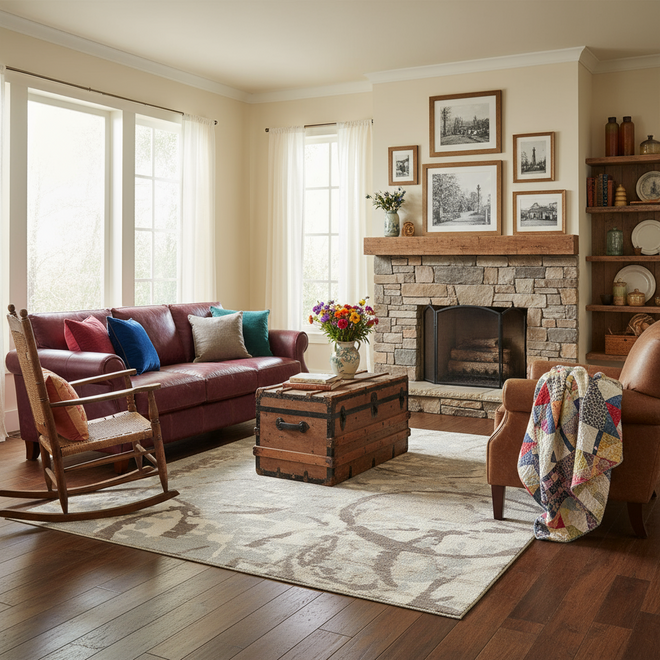
- Floors: medium warm wood, or a faded floral or quatrefoil rug over a neutral base.
- Large upholstery: linen or cotton in oatmeal, flax, or faded blue.
- Accents: sage, ochre, or a deeper blue in small doses.
Pattern Proportion: The Rule Beginners Skip
Pattern works on a ratio: roughly 70 percent solid, 20 percent subtle texture (woven linen, ticking stripe, small-scale print), and 10 percent bold pattern (toile, large floral). Flip that ratio and the room tips into busy.
Texture Is the Real Differentiator
What to Skip
A few elements consistently fight this style, yet beginners buy them because they look French in a store display:

- High-gloss finishes on furniture or frames
- Bright saturated color in large doses (a red accent wall, an emerald velvet sofa)
- Matching pattern sets across pillows, curtains, and upholstery
- Chrome or polished nickel hardware in a room built on aged brass, iron, or oil-rubbed bronze
Affordable French Country Home Decor That Looks Curated
You can build a curated look on a small budget by buying a few character pieces and letting neutral basics do the rest. The most useful thing to understand about affordable French Country home decor: the style is forgiving of inexpensive items, because age and imperfection are the point.
French Country Furniture Essentials for Every Room
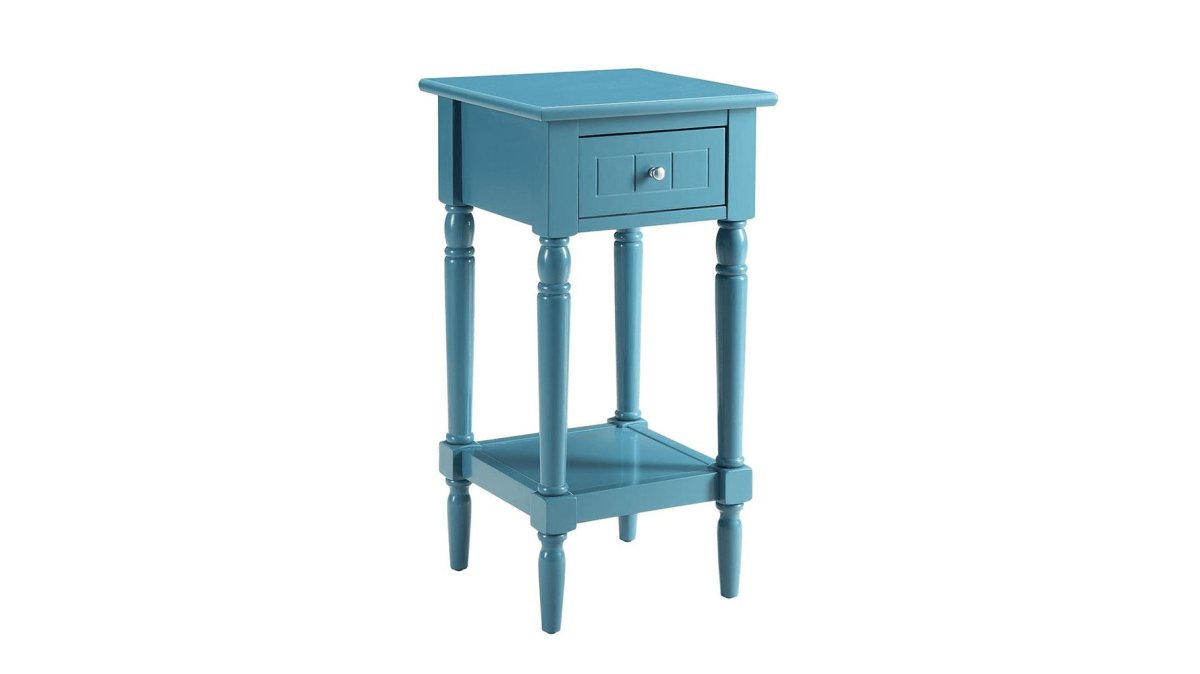
French country furniture essentials come down to three pieces: a small accent table, a solid wood chair, and one upholstered or patterned anchor. Turned legs, sculpted accents, and visible wood grain signal the style; sleek metal legs and glass tops fight it.
| Piece | Price | Best For | Why It Works |
|---|---|---|---|
| Accent table with shelf | $122.00 | Small spaces, renters | Turned legs, drawer storage |
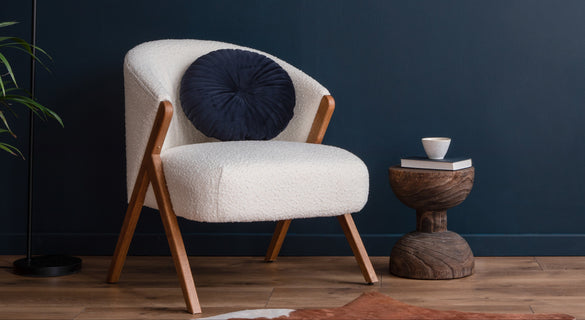
| Solid wood accent chair | $487.00 | Living or dining anchor | Antique finish, solid frame |
| Toile pillow cover | $32.00 | Quick style refresh | Instant pattern, low cost |
| Galvanized pitcher vase | $47.00 | Table styling | Leakproof liner, farmhouse metal |
What to Look For in the Wood Itself
The finish matters less than species and construction. Most accessible French Country furniture falls into three categories:
- Solid oak, pine, or walnut: the ideal. Heavy, repairable, and ages into the patina the style is built on. Expect visible grain and small imperfections.
- Veneer over engineered wood: common at lower price points. Looks fine when new but cannot be sanded or refinished, so distressed finishes on veneer are painted on rather than earned.
- Painted MDF: the budget option. Works for accent pieces and shelves, but avoid it for anything that takes weight or daily use.
Proportion Rules That Keep a Room From Feeling Off
Beginners often buy the right style in the wrong scale. Working proportions:
- Side tables should sit within 2 inches of your sofa arm height. Too low and the lamp looks stranded; too high and it crowds the arm.
- Dining chairs should leave 6 to 10 inches between the seat and the underside of the table.
- Accent chairs should not block a walking path narrower than 36 inches.
- Rugs should extend at least 6 inches beyond the front legs of any seating piece, or the room reads as floating.
The Budget Tier: Where to Save and Where to Spend
- Spend on: one anchor piece per room (a chair, a table, or a rug). This is the piece people notice.
- Save on: pillows, throws, vases, candleholders, dried stems, and small ceramics. These carry the style visually at a fraction of the cost.
- Thrift for: solid wood side tables, wooden trays, brass candlesticks, and picture frames. Estate sales and online marketplaces routinely list these under $40.
DIY and Refinishing Shortcuts
If you already own plain wood furniture, you are closer than you think. Two beginner-safe projects:
- Distress a painted piece. Paint a small table in cream or soft grey, let it cure, then lightly sand the edges and corners by hand. Wipe with a dry cloth. The wear should look random, not sanded in a pattern.
- Swap the hardware. Replacing modern pulls with aged brass or iron knobs takes minutes and shifts a piece from contemporary to French Country for under $20.
The 3-5-7 Rule in Practice: Styling Without Clutter
The 3-5-7 rule groups decorative objects in odd numbers: three in a small arrangement, five in a medium one, seven across a larger surface. Odd counts read as more natural to the eye, and the rule gives beginners a stopping point before a shelf turns into a junk pile.
- Three: one vase, one stack of two books, one small candle plate
- Five: add a framed print and a small bowl
- Seven: add a pair of candlesticks and a dried bundle at the far end
Modern vs. Traditional French Country: Which Fits Your Space?
The French Toile de Jouy Blue & White Pattern Throw Pillow Cover sits comfortably in either camp: 100% polyester, easy to care for, and square, so it works on a sofa, chair, or bed. The Black French Toile de Jouy Print Throw Pillow Covers take the same idea in a darker, jacquard-woven direction with a striking black border that reads more modern against a neutral sofa.

Caring for French Country Materials So They Last
Maintenance is where most beginners lose the look. Distressed finishes and natural materials need gentle handling, not heavy cleaners.
- Metal and galvanized pieces: wipe with a damp cloth and dry immediately to protect the patina
- Wood furniture: dust regularly and avoid soaking; a dry cloth preserves the distressed finish
- Polyester pillow covers and rugs: machine washable in most cases, but air dry to keep shape
- Dried botanicals: keep out of direct sun and away from damp rooms
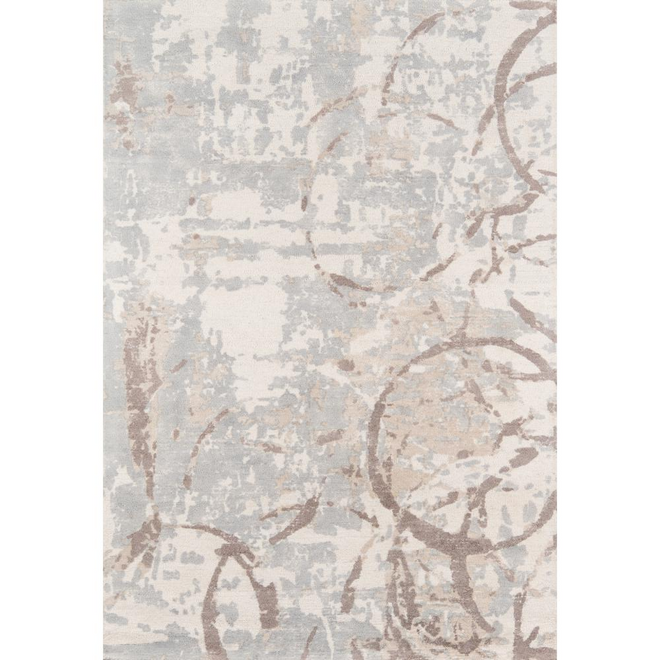
- Rugs: vacuum without a beater bar, and iron gently to remove shipping creases
Conclusion: Where to Start This Week
The hardest part of this style is not finding pieces but knowing which to buy first. Start with one anchor for your main room, add a textile for pattern, then finish with a natural accent. That sequence keeps a room from looking like a showroom and keeps spending controlled.
Frequently Asked Questions
Is French country decor out of style in 2026?
No. French country decor continues to trend in 2026 because its core elements, muted tones, natural linens, distressed wood finishes, and vintage accents, fit easily into modern homes. The style has shifted toward lighter, less ornate versions that work in apartments and smaller rooms. Beginners can start with one or two pieces, like a toile pillow cover or a rustic vase, and build from there without committing to a full redesign.
What are the key elements of French country decor?
The key elements include a neutral palette with muted tones, natural materials like wood and linen, floral or toile patterns, wrought iron or distressed metal accents, and vintage or antique touches such as patina and gilded details. Soft lighting from a chandelier or table lamp adds warmth. Texture matters as much as color: pair smooth ceramics with rough wood and woven fabrics. Start with three or four of these elements in one room rather than all at once.
How can beginners incorporate French country accents on a budget?
Start with small, high-impact pieces. A French toile throw pillow cover runs about $32, a natural wheat ear bundle is $30, and a wood farmhouse candle holder plate is $30. These accents add French country character without a large spend. Layer them onto furniture you already own, then add one larger piece, such as a French country accent table at $122, when your budget allows. Free shipping on orders over $50 helps keep the total lower.
What is the difference between French country and farmhouse decor?
French country decor leans more ornate and romantic, with toile patterns, curved furniture legs, gilded accents, and refined textiles. Farmhouse decor is plainer and more rustic, focused on raw wood, galvanized metal, and simple shapes. The two styles share warmth and a love of natural materials, so they mix well. A beginner can use farmhouse basics as a base and layer French country accents, like a toile pillow or a distressed chandelier, on top.
Building a French Country room is a slow process, and that is exactly what makes it look right. The pressure to finish in one shopping trip is what produces rooms that feel staged rather than lived in. Pick one anchor piece, layer in texture over the following weeks, and let the space age into itself. Get started with The Finishing Touch Decor, LLC and build a room that looks collected, not purchased.